A breakdown rarely happens at a convenient time. It is usually on the school run, on the way to work, in poor weather, or late at night when you just want to get home. If you are wondering how to handle roadside breakdown situations without making things worse, the priority is simple – protect yourself first, then deal with the vehicle.
Panic causes bad decisions. Drivers often try to limp on with warning lights showing, stop in unsafe places, or get out of the car too quickly. A calmer, more practical approach gives you a better chance of staying safe and getting help fast.
How to handle roadside breakdown in the first few minutes
The first minute matters more than most people realise. If the vehicle starts losing power, makes a loud mechanical noise, develops a puncture, or shows a serious warning light, ease off the accelerator and look for the safest place to stop. That may be a lay-by, a hard shoulder where permitted, a wide verge, or a side road away from moving traffic. Do not brake sharply unless you have to.
Once stopped, switch on your hazard warning lights straight away. This tells other road users that something is wrong and gives them more time to react. If it is dark, foggy, or raining heavily, visibility becomes a bigger issue, so keeping the vehicle as visible as possible is key.
Then ask yourself one question – is it safer to stay in the vehicle or get out? The answer depends on where you have stopped. On a busy road with fast traffic, getting everyone out of the vehicle and behind a barrier is often safest if you can do it without stepping into danger. On a quieter road, it may be safer to wait well away from the carriageway. What matters is not following a rule blindly, but judging the risk around you.
Make yourself safe before you think about the car
Many breakdowns are minor. A flat battery, an empty fuel tank, or a tyre problem can often be dealt with quickly. But roadside danger comes from traffic, poor visibility, and the pressure to act fast. That is why safety comes before diagnosis.
If passengers are with you, especially children, keep them together and away from the road. If you have a high-visibility jacket, put it on before exiting the vehicle if it is safe to do so. If you carry a warning triangle, be careful with it. On some roads it may not be safe or appropriate to place one, particularly where traffic is moving quickly.
Do not stand in front of or behind your vehicle if other drivers may not see you in time. It is a common mistake, especially when checking for damage. The vehicle can be replaced. You cannot.
If you break down on a motorway
A motorway breakdown needs extra care. Pull onto the hard shoulder or into an emergency area if you can. Keep hazard lights on. If possible, exit through the left-hand side and move well away from the vehicle, ideally behind the barrier. Do not stay in the car unless leaving it would be more dangerous.
Use an emergency phone if one is nearby, or call for recovery from a safe place. If your car has stopped in a live lane and you cannot move it, keep seatbelts on, switch hazards on, and call emergency services immediately. That is not a normal breakdown situation. It is an immediate risk.
What to check and what to leave alone
Once you are safe, you can make a basic assessment. Keep it simple. Look for obvious signs such as a flat tyre, steam from the bonnet, warning lights on the dashboard, or the engine failing to turn over. If you know exactly what the issue is and it can be resolved safely, you may be able to get moving again. If you are guessing, do not start taking the car apart at the roadside.
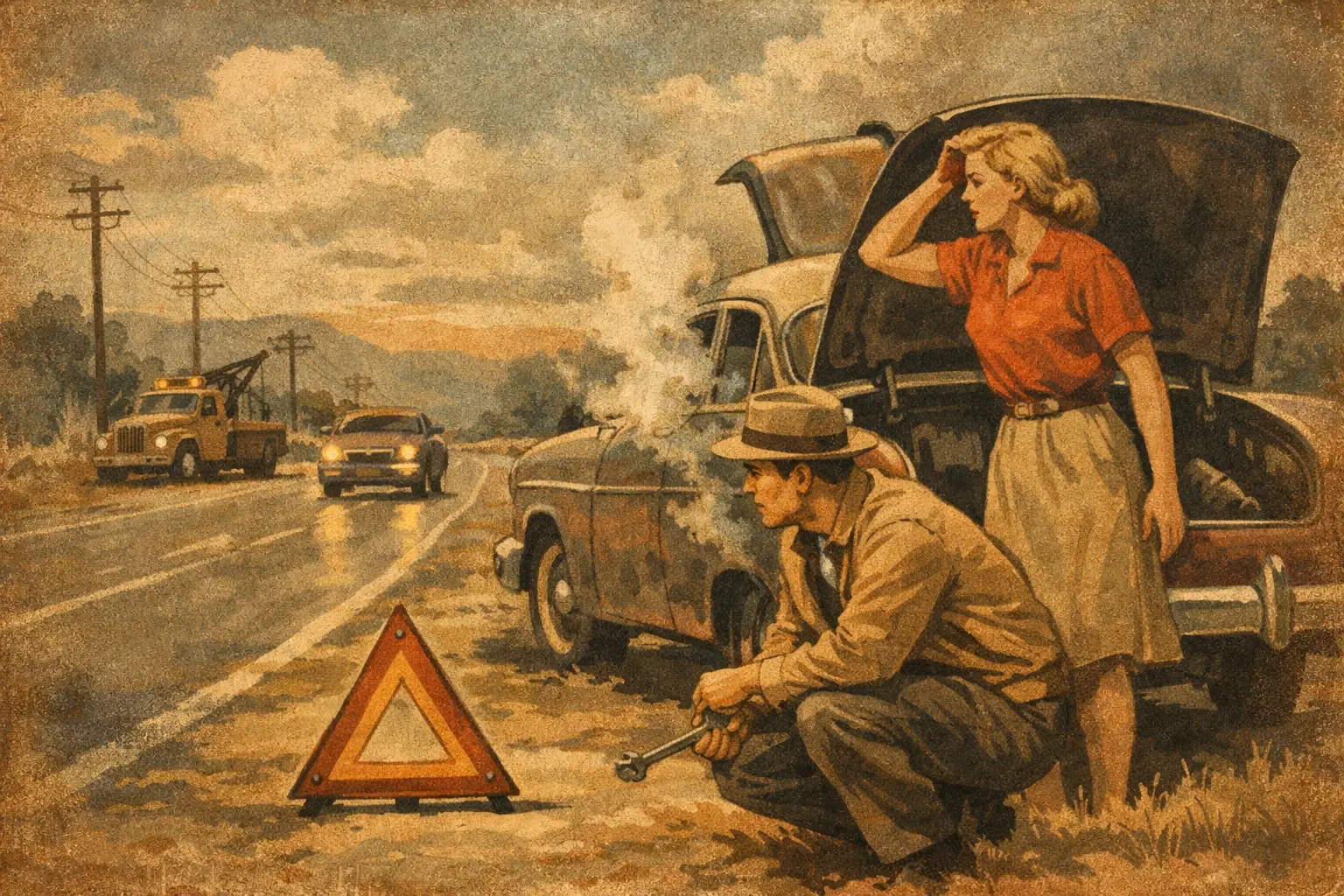
Overheating is a good example. If steam is coming from the bonnet, do not open it straight away. Let the engine cool. Opening the cooling system too soon can cause burns. A dead battery is another example. A jump start may solve the problem, but only if you have the right equipment and know the correct procedure. Modern vehicles can be sensitive to incorrect jump starting.
Fuel problems are also more common than people like to admit. Misfuelling or simply running out can happen to anyone, especially on a long day. If that is the issue, forcing the vehicle to keep running can lead to a bigger bill than the original mistake.
When to call for breakdown recovery
A lot of drivers wait too long before calling for help. If the car is in a risky position, if you cannot identify the fault, or if the fault involves steering, brakes, wheels, smoke, overheating, accident damage, or electrical failure, stop trying to fix it yourself. Call for roadside assistance or recovery.
The best recovery call is a clear one. Give your exact location, the vehicle registration, the make and model if needed, and a short description of the problem. Say whether you are blocking traffic, whether the car can roll, and whether there are passengers with you. This helps the recovery operator send the right vehicle and equipment.
If you are in Peterborough or the surrounding postcodes, using a local recovery company can save time because local operators know the roads, common pinch points, and how to reach awkward locations quickly. That matters when you are stuck on a roundabout, outside a retail park, or on a narrow residential road with traffic building up.
What to do while you wait
Once help is on the way, avoid the temptation to keep trying random fixes. Repeated attempts to start a damaged engine can turn a recoverable problem into a more expensive repair. Keep your phone charged if you can, stay somewhere safe, and be ready to answer calls from the recovery driver.
If weather conditions are poor, keep warm but be sensible about running the engine. If there is any sign of smoke, overheating, or a fuel issue, leave it off. If you are stranded for a while, let someone know where you are, especially if you are travelling alone.
How to handle roadside breakdown at night or in bad weather
Darkness and poor weather change the risk. A simple breakdown in daylight can become much more dangerous in heavy rain, fog, or on an unlit road. Visibility drops, stopping distances increase, and other drivers may not realise you are stationary until they are too close.
That means your main job is to be seen and stay out of the way. Hazard lights should go on immediately. Interior lights can help briefly while you gather essentials, but do not rely on them. If you have side lights and it is safe to use them without draining the battery completely, they can help with visibility while you wait.
In these conditions, getting professional help quickly is usually the right call. A no-nonsense recovery service is not just about convenience. It reduces the time you spend exposed at the roadside.
Mistakes that make a breakdown worse
Some breakdown mistakes are made because drivers are embarrassed. Others happen because they are in a rush. Both can cost you.
Trying to drive on a flat tyre often damages the wheel as well. Ignoring a temperature warning can turn a minor cooling issue into major engine damage. Accepting help from unverified passers-by may feel quicker, but it is not always wise, especially if you are alone or the situation feels off.
There is also the towing question. Informal towing with another vehicle is not always safe, legal, or practical, particularly on busy roads or with modern vehicles that have automatic gearboxes or electronic parking brakes. If the car is immobilised, proper recovery equipment is usually the safer option.
A few things worth keeping in your car
You do not need to turn your boot into a workshop, but a few basics make breakdowns easier to manage. A charged phone, phone charger, torch, high-visibility jacket, waterproof coat, and a small first aid kit all help. In winter, a blanket and gloves are sensible. If you regularly drive long distances, a battery pack can also be useful.
What you carry should match how you use the car. A family car doing school runs needs different backup from a van used for trade work. The principle is the same – carry what helps you stay safe and communicate clearly.
The right goal is not fixing everything yourself
A roadside breakdown feels urgent because it is disruptive, but the real aim is not to become a mechanic on the hard shoulder. The aim is to avoid injury, avoid extra damage, and get the vehicle moved or repaired in the safest way possible.
That is why the best response is usually a practical one. Stop somewhere as safe as you can. Make the vehicle visible. Protect passengers. Assess the problem without taking risks. Then get the right help. If you need fast local support, Car Recovery Peterborough is built around exactly that kind of situation – quick response, clear communication, and getting you off the roadside without fuss.
The most useful thing to remember is this: when your car lets you down, slowing the situation down is often what gets you home sooner.
Leave a Reply