You turn the key, the dashboard flickers, and then nothing. That is usually the moment people ask, can roadside recovery fix flat battery problems there and then, or is the car heading straight onto a lorry? The short answer is yes, often they can help on the spot. But it depends on why the battery has gone flat, how badly discharged it is, and whether the battery itself has reached the end of its life.
A flat battery is one of the most common reasons drivers call for breakdown help. It is also one of the quickest issues to deal with when the fault is straightforward. If the battery has simply lost charge because lights were left on, the car has been standing for too long, or cold weather has taken its toll, roadside recovery can often get you moving again with a jump start or booster pack.
Can roadside recovery fix flat battery issues at the roadside?
In many cases, yes. A recovery operator will usually start by checking whether the battery is the actual problem. Not every non-start issue is a dead battery. Sometimes it is the starter motor, alternator, wiring, key recognition system, or another electrical fault that looks similar from the driver’s seat.
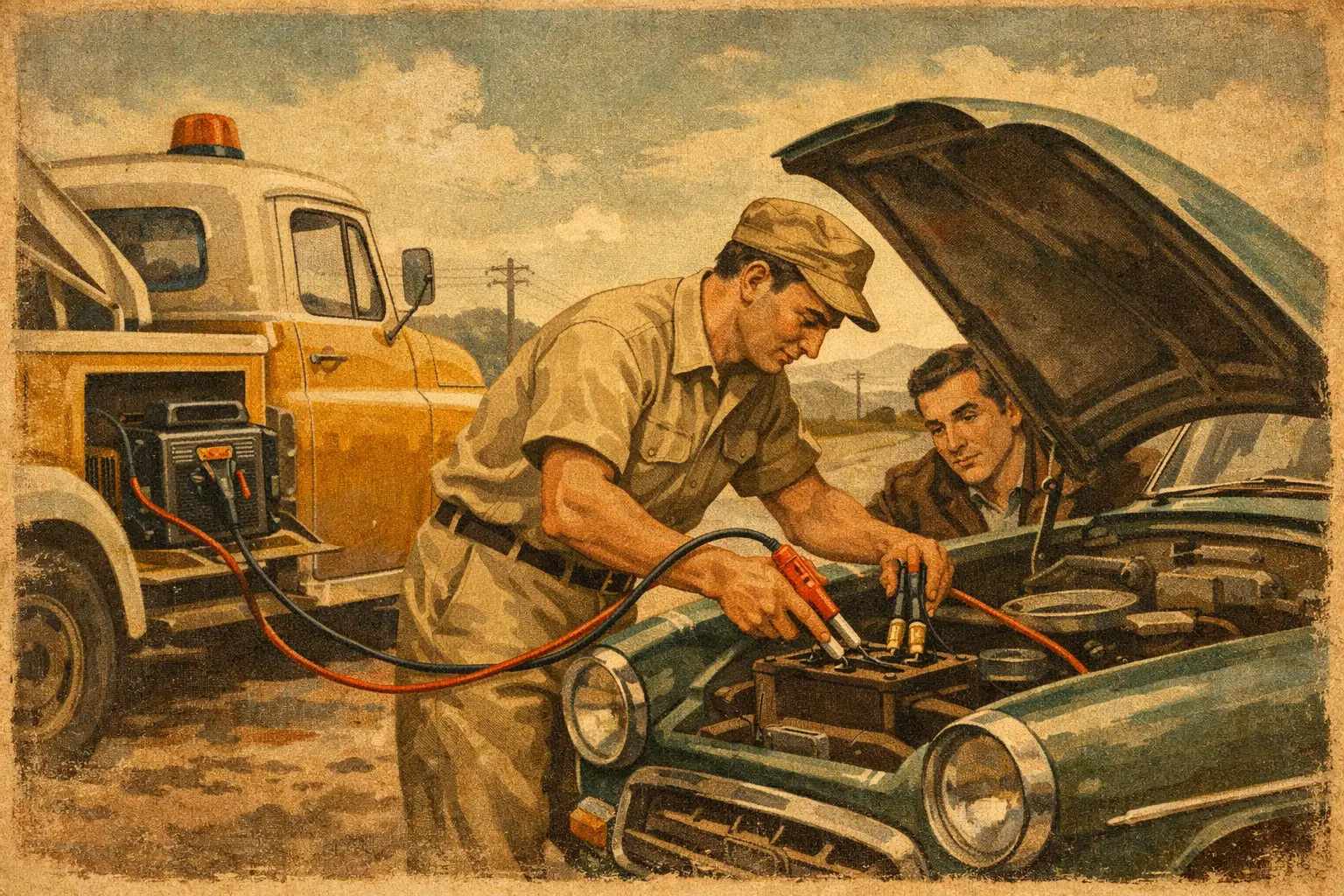
If it is a flat battery, the usual first step is a safe jump start using professional equipment. That is faster and safer than relying on another car and a set of old jump leads from the boot. Once the engine starts, the operator may check whether the battery is holding enough charge to keep the vehicle running and whether there are signs of a wider charging issue.
If the battery is only temporarily discharged, you may be able to continue your journey. If the battery is damaged, very old, or refuses to hold charge, the problem is not really fixed by a jump start alone. In that case, roadside recovery may still help, but the next step could be battery replacement or vehicle recovery.
What roadside recovery will usually do first
When you call for help with a suspected flat battery, the aim is simple – get the car started safely if possible. A good operator will normally ask a few quick questions before arrival. They may want to know whether the engine clicks, whether dashboard lights come on, how long the car has been standing, and whether there were any warning lights before it failed.
At the roadside, they will usually confirm the symptoms before connecting anything. That matters because trying to jump start the wrong fault wastes time and can create more risk. If the battery terminals are heavily corroded, the battery casing is swollen, or there is an obvious electrical issue, a jump start may not be the right move.
Where the battery is simply drained, a booster pack is often enough to start the vehicle in minutes. That is why flat battery callouts are often among the more straightforward jobs for a local recovery service.
When a jump start is enough
A jump start is often enough when the battery has gone flat for a clear reason and is otherwise in decent condition. This might happen after leaving interior lights on overnight, not using the vehicle for a week or two, or during a spell of freezing weather.
In that situation, once the engine is running, the battery may recover enough charge through normal driving. Even then, there is a catch. If the battery has gone flat more than once recently, or the car struggles again after a short stop, the issue may not be over.
A single successful start does not always mean the battery is healthy. It only means the car started that time.
When the battery needs more than a jump start
Sometimes the battery is beyond recovery. Older batteries can fail internally, especially after repeated deep discharge. You might get one last start from a booster, but the battery may die again as soon as the engine is switched off.
This is also common where the alternator is not charging properly. In that case, the battery is not the root cause. It is the part showing the symptoms. A roadside operator may be able to identify that quickly, which saves you from replacing a battery only to find the same problem returns.
Signs it is more than just a flat battery
Drivers often assume a non-start means the battery is dead, but a few clues suggest something else is going on. If you hear a rapid clicking noise, see dim lights, or notice slow cranking, that does point towards a weak battery. If nothing happens at all, or the dashboard behaves oddly, it could still be battery related, but there may be another electrical fault involved.
If the car starts with a boost and then cuts out soon after, the charging system needs checking. If it will not start even with professional equipment, roadside recovery may need to move the vehicle for further diagnosis or repair.
Modern vehicles can complicate things too. Start-stop systems, larger electrical loads, and sensitive electronics mean battery faults are not always as simple as they used to be. Some cars need the correct battery type fitted, and some battery replacements involve coding or system resets. That is one reason a quick roadside answer is not always the full answer.
Can roadside recovery fix flat battery problems permanently?
Sometimes yes, sometimes no. If the problem was a one-off discharge and the battery remains healthy, a jump start can effectively solve it there and then. You get going, the battery recharges, and the issue does not come back.
But if the battery is worn out, the terminals are faulty, or the alternator is failing, roadside recovery is more about immediate help than a permanent repair. The service gets you out of a stressful situation safely and quickly. Whether that becomes a lasting fix depends on the condition of the vehicle.
That is the important distinction. Roadside recovery can often restore mobility straight away. It cannot magically make a failing battery new again.
What to expect when you call for help
If you are stuck at home, at work, in a car park, or by the roadside, the best thing you can do is give clear information. Say whether the car is completely dead, whether any lights come on, and whether you are in a safe place. If you are in Peterborough or the surrounding area, a local service like Car Recovery Peterborough can usually respond faster because they know the roads and common callout spots.
Once on scene, the operator will normally assess the battery, attempt a safe start if appropriate, and tell you honestly whether the car is likely to restart reliably after you switch it off again. That honesty matters. Nobody wants to be sent on their way only to end up stranded at the next petrol station.
If the vehicle cannot be safely restarted or kept running, recovery to a garage or another location may be the sensible option.
A few things you can do while waiting
Keep the ignition off unless told otherwise, and avoid repeated attempts to start the engine. That can flatten the battery further and sometimes complicate diagnosis. If it is dark, use lights only if needed for safety. If you are in a live traffic area, stay safe and visible.
It also helps to have your registration, location, and any recent battery or repair history ready. Small details can speed things up.
Is it cheaper to call roadside recovery or replace the battery straight away?
It depends on the situation. If you already know the battery is old and failing, replacement may be the better spend. But if you are not sure whether the fault is the battery, charging system, or something else, roadside recovery can be the more practical first move.
That is especially true when you need the car moving now. A fast callout can get you started, confirm the likely cause, and stop you paying for parts you may not need. It also removes the hassle of guessing, especially if you are stranded away from home or trying to get to work, school pickup, or an appointment.
The bottom line on flat battery callouts
So, can roadside recovery fix flat battery faults? Very often, yes – at least enough to get you moving again. A proper jump start or battery assessment is exactly the kind of job roadside recovery deals with every day. The real question is whether the battery has simply gone flat or whether it has failed.
That is why a quick professional check is worth it. It gives you a practical answer fast, without guesswork, and helps you decide whether you can carry on, need a new battery, or should recover the vehicle before it lets you down again.
If your car will not start, do not keep hoping for a different result from the same turn of the key. Get it checked, get a clear answer, and get moving again with less hassle.
Leave a Reply