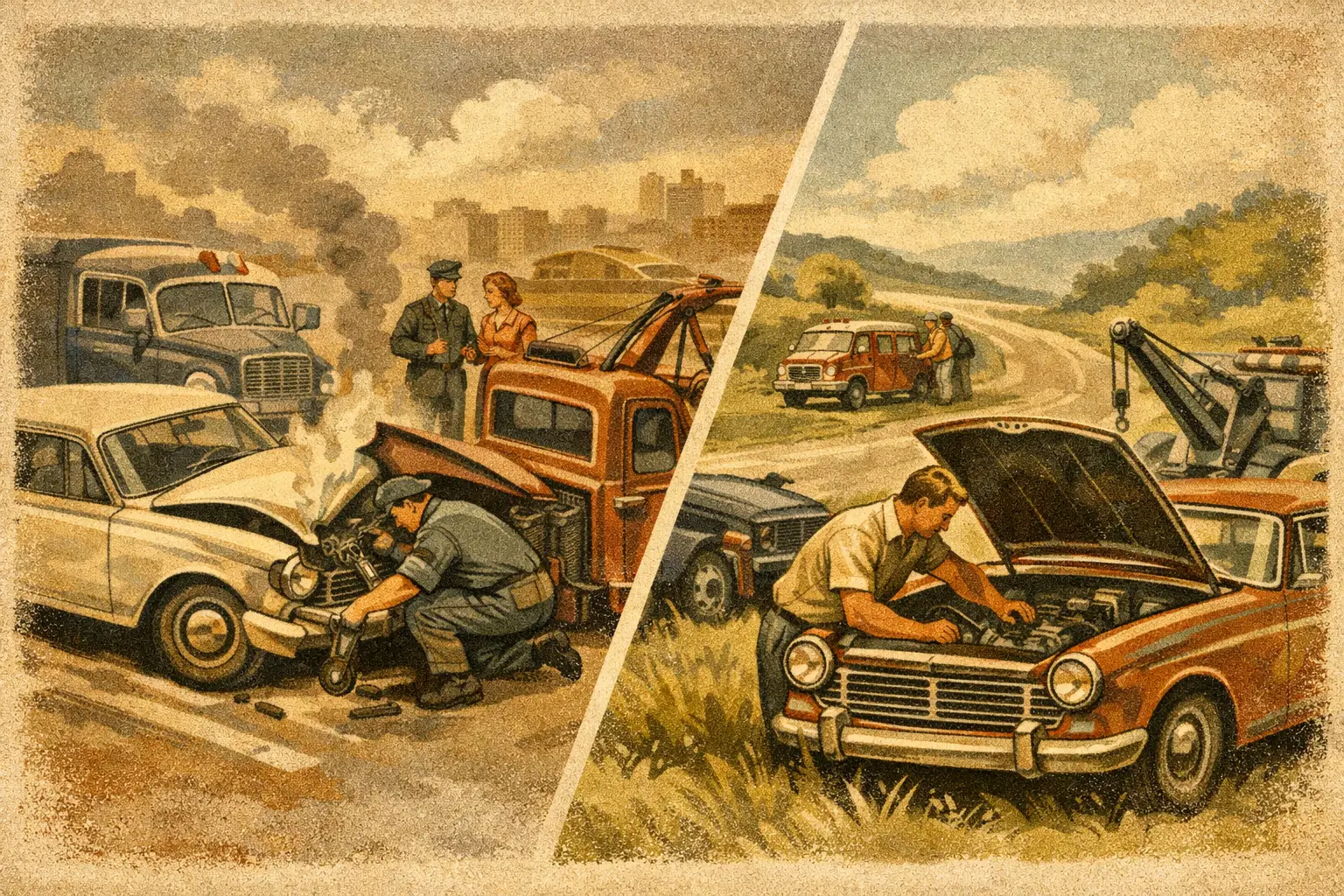
A car that will not move is stressful enough. A damaged car after a collision is a different kind of problem altogether. That is why understanding accident recovery vs breakdown recovery matters – the right service gets you moving faster, avoids wasted time, and makes sure your vehicle is handled properly.
Some drivers use the terms as if they mean the same thing. They do not. Both involve collecting an immobilised vehicle, but the reason the vehicle cannot be driven changes the equipment needed, the way it is loaded, and sometimes where it needs to go next. If you call for the wrong type of help, you can lose valuable time when you are already stuck.
What accident recovery vs breakdown recovery actually means
Breakdown recovery is for vehicles that have become undriveable because of a fault, failure, or mechanical problem. That could be a flat battery, engine trouble, clutch failure, electrical fault, overheating, a puncture you cannot safely sort at the roadside, or simply a car that will not start at home or work. In many cases the vehicle is otherwise intact, even if it cannot be driven.
Accident recovery is for vehicles involved in a collision or impact that has left them unsafe, damaged, or obstructing the road. The issue is not just that the car will not move. It may have body damage, broken suspension, steering problems, wheel damage, deployed airbags, fluid leaks, or parts scraping the ground. Even if the engine still runs, the vehicle may not be roadworthy.
That difference sounds simple, but it affects the whole job. A non-starting car on a driveway is one thing. A car with front-end damage, a locked wheel, or twisted steering is another.
When breakdown recovery is the right call
If your car has let you down without any collision, breakdown recovery is usually what you need. This covers the kind of everyday problems drivers deal with when a vehicle suddenly refuses to cooperate.
A common example is the flat battery. Sometimes a jump start is enough and you are away again. Sometimes the battery is too far gone, or there is another electrical issue behind it, and the car needs transporting to a garage. The same applies to starter motor faults, alternator issues, gearbox problems, overheating, and warning lights that make it unsafe to carry on driving.
Breakdown recovery also applies when the car is stuck somewhere awkward but not crash damaged. Maybe it has cut out on a roundabout, stopped on a dual carriageway, or will not restart in a supermarket car park. In those cases, the priority is safe collection and onward transport.
There is a practical point here. Some breakdowns can be fixed at the roadside, but not all can. If the fault cannot be sorted quickly, recovery becomes the sensible option. That saves you waiting around while a small issue turns into a much bigger disruption.
Signs you need recovery rather than a roadside fix
If the vehicle has repeated warning lights, heavy smoke, loss of drive, severe overheating, or it simply will not start after the obvious checks, recovery is usually the safer call. The same goes for situations where driving even a short distance risks more damage.
Trying to limp a car to a garage can cost more than recovering it properly. A failed clutch, damaged turbo, or overheating engine can go from bad to expensive very quickly.
When accident recovery is the right call
Accident recovery is needed when a collision has left the vehicle unsafe, immobile, or legally unfit to drive. That includes anything from a low-speed bump with suspension damage to a more serious crash where the car cannot roll freely.
The biggest issue after an accident is that damage is not always obvious at first glance. A bumper hanging loose is easy to spot. Bent suspension, cracked wheel components, steering damage, and leaking fluids are not always as clear until the vehicle is moved. That is why driving it away just because the engine starts can be a bad decision.
Accident recovery may also involve more awkward loading conditions. Wheels may be locked. Tyres may be shredded. The car may be stuck against a kerb or facing the wrong direction. In some cases, specialist handling is needed to avoid causing further damage during loading.
This is where the service differs from a standard breakdown collection. The operator may need skates, winching equipment, extra care with low bodywork, or a different loading approach depending on the damage.
Why accident damage changes the job
A breakdown vehicle is often mechanically dead but physically straightforward. An accident-damaged vehicle can be unstable, scraping, leaning, or unable to steer. Even moving it a few feet can take more planning.
That matters for your safety and for the condition of the car. Poor handling during recovery can worsen existing damage. Proper accident recovery is about controlled movement, safe loading, and getting the vehicle to the right destination without creating new problems.
The main difference in practical terms
The clearest way to think about accident recovery vs breakdown recovery is this: breakdown recovery deals with failure, accident recovery deals with damage.
With a breakdown, the focus is usually diagnosis, quick assistance if possible, and transport if needed. With an accident, the focus shifts to safety, damage management, secure loading, and moving a vehicle that may no longer behave normally.
There is some overlap, of course. Both services involve collecting immobilised vehicles. Both need a fast response. Both may take the car to your home, a garage, a body shop, or another safe location. But the condition of the vehicle changes what is involved on arrival.
What to tell a recovery operator when you call
Getting the right help starts with giving a clear picture of the problem. You do not need technical language. You just need the basics.
Say whether the vehicle has broken down or been in a collision. Mention if the car starts, if the wheels turn, whether the steering is affected, and if there is visible damage or a fluid leak. If you are in a dangerous position, say that first. If the car is in a car park, on your drive, at the roadside, or somewhere with height or access restrictions, mention that too.
These details help the operator send the right vehicle and avoid delays. A straightforward non-starter may need a different approach from a crash-damaged car with locked wheels.
A few details that save time
If you can, have your location, vehicle registration, make and model, and destination ready. After an accident, it also helps to say whether the car can roll at all. That one detail often determines the loading method.
Photos can be useful as well, especially after a collision. They help confirm the condition of the vehicle before anyone arrives.
It depends on what happened after the vehicle stopped
Some situations sit in the middle. For example, if you hit a pothole and the tyre bursts, that may begin as damage rather than a mechanical failure. If the wheel or suspension is affected, it starts to look more like accident-style recovery, even though there was no classic road traffic collision.
Likewise, if a breakdown causes a minor impact, the service needed may depend on the condition of the vehicle afterwards. A car that simply cut out and rolled to a stop is one thing. A car that struck a barrier and bent a wheel is another.
This is why the best approach is not to worry too much about using the perfect label. Focus on describing what the vehicle is doing now. Can it start? Can it steer? Can it roll? Is there damage? Those answers matter more than the wording.
Choosing the right recovery support fast
When you are stranded, speed matters, but so does getting the right service first time. A provider handling both breakdowns and accident-damaged vehicles can usually assess the situation quickly and arrange the appropriate collection without overcomplicating it.
For drivers in Peterborough and nearby areas, that can make a real difference on a busy day or late at night. If the vehicle is blocking access, stuck at the roadside, or not safe to drive, you want clear answers and a direct plan, not a long back-and-forth.
The simplest rule is this. If your car has failed, think breakdown recovery. If it has been hit, damaged, or left unsafe after an impact, think accident recovery. And if you are not sure, describe the condition of the vehicle and let the recovery operator guide it.
When your car will not move, the right help is the help that arrives prepared.
Leave a Reply