June 13, 2026
Roadside Breakdown Checklist Guide for Drivers
A roadside breakdown checklist guide for UK drivers - what to do first, what to keep in the…
Read article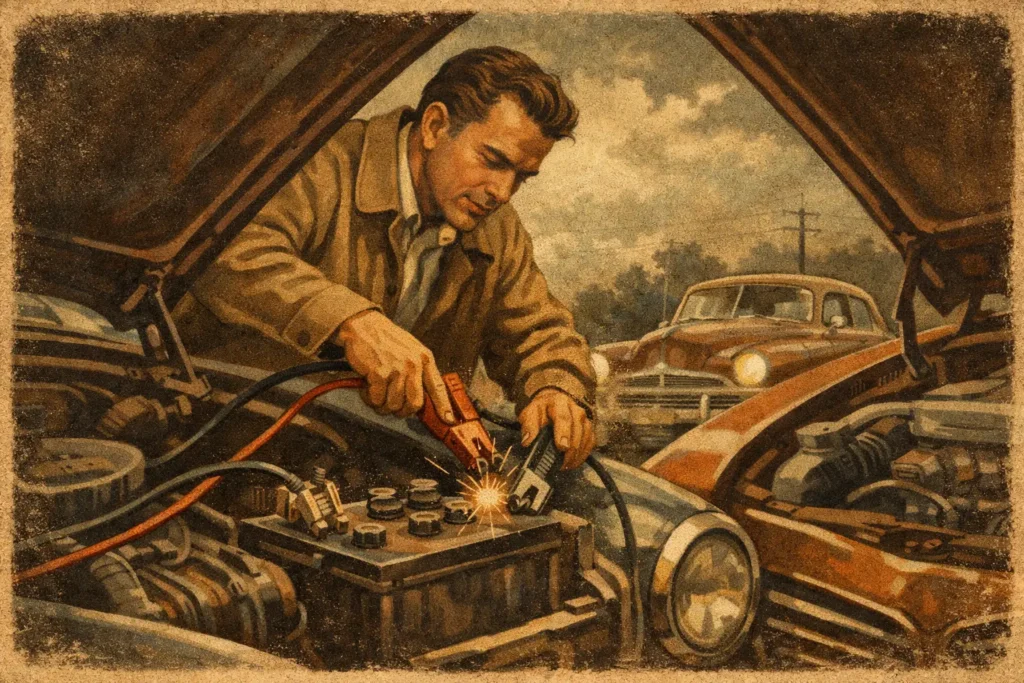
A car that was fine yesterday and dead this morning usually points to one thing – the battery has dropped too low to start the engine. So, can a dead battery be jumped? Often, yes. But not always, and forcing it can make a bad situation worse.
If you are stood on the drive, in a work car park or at the roadside with a car that will not turn over, the first job is to work out whether the battery is simply flat or whether something else has failed. A jump start can get you moving again if the battery has enough life left to accept a charge boost. If the battery is damaged, completely failed or there is another electrical fault, jump leads will not solve it.
No. A flat battery and a failed battery are not always the same thing. If the battery has been drained because the lights were left on, the car has been standing for too long, or cold weather has taken the edge off it, a jump start often works well.
If the battery is old, swollen, leaking, cracked or giving off a strong smell, do not try to jump it. The same applies if the car has obvious wiring damage, warning lights linked to major electrical faults, or signs of alternator trouble. In those cases, a jump start may do nothing at all, or it may only get the engine running for a few minutes before the car cuts out again.
That is why the real answer is: yes, sometimes, but it depends on why the battery is dead.
There are a few clues that suggest a jump start is worth trying. The dashboard may light up weakly, the starter may click, or the engine may crank slowly without firing. You might also notice central locking working poorly, dim interior lights or a radio that powers on and off.
These symptoms often mean the battery is low on charge rather than completely beyond use. A proper jump start from another vehicle or a booster pack may be enough to get the engine started.
If there is no response at all, that does not automatically mean the battery is beyond help, but it does raise the chances of a deeper fault. Loose terminals, corrosion, a failed starter motor or a blown fuse can all look like a dead battery to the driver.
There are times when it is better to stop and get assistance rather than have a go. Modern vehicles are far more sensitive than older ones, and the wrong jump start procedure can cause expensive electrical issues.
Avoid attempting it if the battery case is damaged, the terminals are badly corroded, the vehicle has been in an accident, or the handbook specifically warns against standard jump starting. Hybrid and electric vehicles are a separate category and should not be treated like a typical petrol or diesel car unless you know the exact procedure for that model.
It is also not sensible to try it if you are in a live traffic area, on a narrow road, in poor weather or anywhere you cannot work safely. Getting moving matters, but not at the cost of your safety.
If the battery appears simply flat and you have the right kit, a jump start is usually straightforward. You need a second vehicle with a healthy battery or a suitable jump pack, plus decent jump leads.
Position the vehicles so the leads reach, but do not let them touch. Switch both vehicles off. Connect the red lead to the positive terminal on the dead battery first, then to the positive terminal on the donor battery. Connect the black lead to the negative terminal on the donor battery, then attach the other end to a solid metal earth point on the car with the flat battery, away from the battery itself if possible.
Start the donor vehicle and let it run for a minute or two. Then try to start the car with the flat battery. If it starts, leave it running and remove the leads in reverse order. If it does not start after a few tries, stop. Repeated attempts can overheat components and point to a fault that jump leads will not fix.
This is the bit many people miss. A successful jump start does not mean the problem has gone away. It only means you have enough power to start the engine.
Once running, the alternator should begin charging the battery. But if the battery is worn out, it may not hold that charge. If the alternator is faulty, the battery may go flat again almost straight away. That is why a car that starts with a jump but fails again later needs attention sooner rather than later.
If possible, drive for a reasonable period rather than stopping after five minutes. Short trips are rarely enough to restore a heavily drained battery. Even then, there is no guarantee the battery will recover fully.
It can, but that does not mean it should be your plan every time. If the same vehicle needs repeated jump starts, there is an underlying issue. In most cases it comes down to one of three things: the battery is at the end of its life, the alternator is not charging properly, or something is draining power when the car is parked.
A parasitic drain can come from surprisingly small faults. Interior lights, dash cams, trackers, faulty door switches and aftermarket accessories are common causes. The car may run perfectly once started, yet still be dead the next morning.
So yes, can a dead battery be jumped more than once? Technically yes. Practically, repeated jump starts are a warning sign, not a solution.
Most problems with jump starting come from rushing. Getting the terminals mixed up is the big one, and it can cause serious electrical damage. Using poor-quality leads is another issue, especially if they are too thin to carry enough current.
People also run into trouble by connecting the final lead directly at the dead battery when there are safer grounding points available, or by trying again and again when the car clearly has another fault. If the battery terminals are loose or badly corroded, the current may not flow properly even with a good donor vehicle.
A final mistake is assuming that if the engine starts, the car is fine to use normally. A battery warning light, flickering electrics or stalling after the jump all suggest that further checks are needed.
If you do not have leads, you are not confident using them, or the vehicle is in an awkward location, calling for roadside help is usually the quickest route. It saves time, avoids guesswork and reduces the chance of damaging the vehicle.
This is especially true with newer cars, vehicles with battery management systems, or cases where the battery may not be the real problem. A proper roadside operator can check whether the battery is taking charge, whether the alternator is working and whether the car is likely to restart once switched off.
For drivers around Peterborough, that matters when you are already late, stuck in poor weather or dealing with a non-starter outside normal hours. In that moment, convenience is not a luxury – it is the whole point.
Not always. If the battery was drained by an obvious one-off cause, such as lights left on, and it holds charge after a jump and proper run, replacement may not be needed immediately. But if the battery is several years old and the car struggles again soon after, replacement is usually the sensible move.
Cold weather exposes weak batteries fast. So do lots of short journeys. If the car has been slow to start for weeks, a jump start is often just the final push before failure.
A no-nonsense approach is best here. If the battery is unreliable, replace it before it leaves you stranded at the worst time.
So, can a dead battery be jumped? Yes, in many cases. If the battery is simply flat, the car has no obvious electrical damage and the jump is done properly, it can get you back on the road quickly. If the battery is failed, damaged or not the real cause of the non-start, it will not solve much.
The key is knowing when a jump start is a sensible fix and when it is time to stop guessing and get help. A quick restart feels like a result, but the real aim is a car you can trust to start again when you need it. That is the part worth getting right.
Need recovery right now?
WhatsApp Us
A roadside breakdown checklist guide for UK drivers - what to do first, what to keep in the…
Read article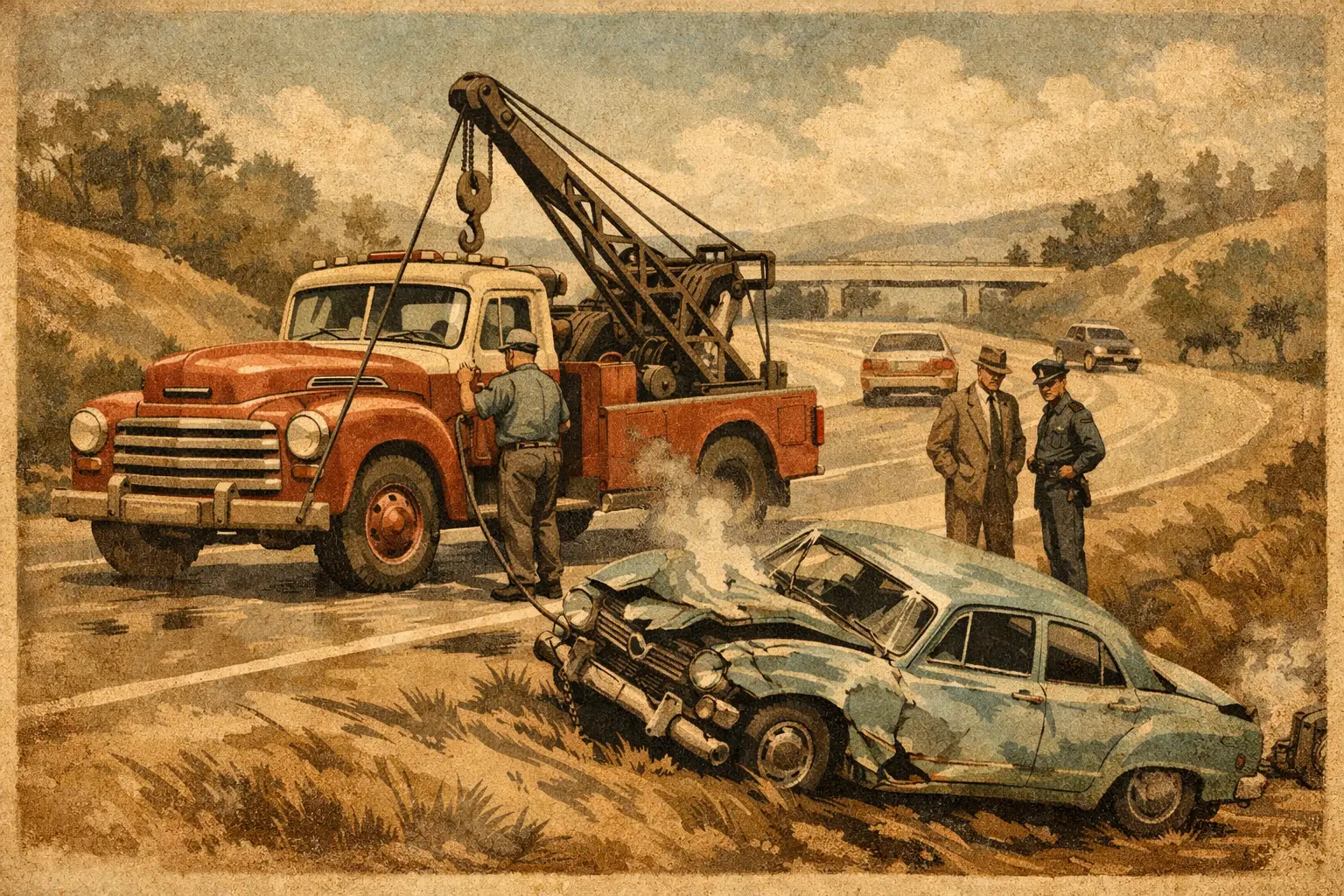
A practical guide to accident vehicle recovery, covering safety, insurer steps, towing, storage, costs and how to get…
Read article
Learn how to handle roadside breakdown safely, from pulling over and staying visible to calling for help and…
Read article