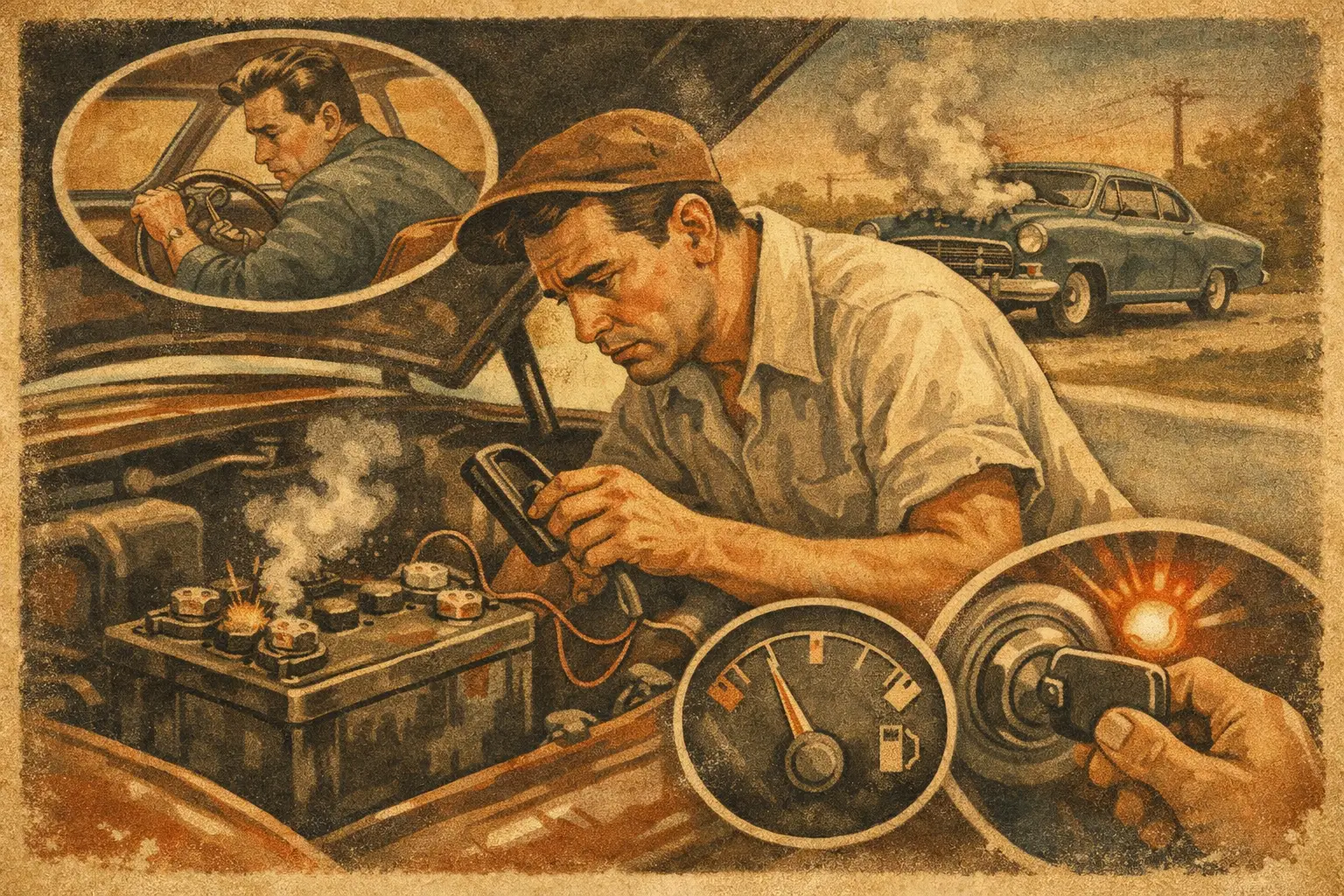
You usually get a bit of warning before a battery gives up completely. The trouble is most drivers only notice the problem when the car will not start and they are already late, stuck at home, or stranded in a car park. If you know the best signs battery is failing, you can act early and avoid turning a simple fix into a breakdown.
A weak battery does not always fail in one clean moment. It often starts with small changes in the way the car starts, the way the lights behave, or the way electrical systems respond. Some of those signs point clearly to the battery. Others can also suggest an alternator fault, poor connections, or a starter motor issue. That is why it helps to look at the full pattern rather than one symptom on its own.
10 best signs your battery is failing
The engine cranks more slowly than usual
This is one of the clearest signs. When you turn the key or press the start button, the engine still tries to start, but it sounds laboured and sluggish. Instead of a quick, confident crank, it drags for a second or two before firing up.
Drivers often notice this more on cold mornings. Lower temperatures reduce battery performance, so an ageing battery that seemed acceptable last week can suddenly feel weak when the weather turns. If the slow cranking starts happening regularly, the battery should be checked soon.
The car clicks but does not start
A rapid clicking noise when you try to start the car usually means there is not enough power to engage the starter properly. In many cases, that points to a flat or failing battery.
It is not a guaranteed battery diagnosis every time. Corroded terminals or a bad earth can create similar symptoms. Still, if the car clicks and refuses to turn over, the battery is high on the list of likely causes.
Dashboard lights flicker or look dim
Weak interior lights, fading dashboard displays, and flickering warning lights can all show that electrical power is dropping. You may notice the dash lights brighten slightly once the engine starts, which can suggest the alternator is then taking over the load.
This is one of the more overlooked failing battery signs because the car may still start for a while. Many people carry on driving until the battery loses the remaining charge and the car finally will not restart.
The battery warning light comes on
The battery light on the dashboard does not always mean the battery itself is the only problem. It can also point to charging issues, including alternator faults or wiring problems. Even so, it should never be ignored.
If that light appears along with slow starts, dim lights, or electrical glitches, there is a strong chance the battery is either not holding charge properly or not receiving the charge it needs. Either way, the vehicle needs attention before it leaves you stranded.
Electrical features stop behaving normally
Modern cars rely heavily on battery power for more than just starting. If the windows move more slowly, the central locking becomes erratic, the radio cuts out, or the infotainment system resets itself, that can be a sign the battery voltage is low.
This matters even more in vehicles with stop-start systems, heated seats, parking sensors, or lots of short urban journeys. More electrical demand means a weak battery is exposed faster.
You need frequent jump starts
If you have already needed one jump start, keep an eye on the car. If you need another a few days later, the problem is no longer bad luck. A healthy battery should recover after a proper run if the charging system is working.
Repeated jump starts usually mean one of three things. The battery is nearing the end of its life, the alternator is not charging properly, or there is a drain somewhere in the vehicle. Whatever the cause, relying on jump leads every week is not a solution.
Signs battery is failing under the bonnet
The battery case looks swollen or damaged
Open the bonnet and take a look if it is safe to do so. A battery that looks swollen, misshapen, cracked, or generally distorted should be treated as a serious warning sign. Heat, overcharging, freezing conditions, and internal failure can all damage the case.
A swollen battery is not one to ignore and carry on with. It may still start the car once or twice, but it is no longer in good condition and should be checked or replaced promptly.
There is corrosion on the terminals
White, blue, or crusty build-up around the battery terminals can interfere with the connection and reduce the battery’s ability to deliver power. Sometimes the battery itself is still decent, but the corroded terminals create starting trouble that feels exactly like battery failure.
This is where diagnosis matters. Cleaning the terminals and securing the connection may solve the issue. But if corrosion returns quickly or the battery is old, replacement may still be the practical option.
There is a strong smell like rotten eggs
A failing battery can sometimes leak gas and produce a sulphur-like smell. If you notice that rotten egg odour around the bonnet, do not ignore it.
It can suggest internal battery damage or overcharging. In either case, it is a sign the battery system is not healthy and the vehicle should be checked rather than pushed through another week of driving.
The battery is simply old
Battery age matters more than many drivers realise. Most car batteries do not last forever, and many start becoming unreliable after around three to five years. That range depends on driving habits, weather, vehicle type, and how often the car sits unused.
Short trips are especially hard on batteries because the engine starts use a lot of power, but the journey may not be long enough to recharge it fully. If your battery is several years old and the car has started showing one or two of the signs above, replacement is often the safer call than waiting for complete failure.
What can be mistaken for a failing battery?
Not every non-start issue comes down to the battery. That is the part many drivers get caught on. A bad alternator may leave the battery undercharged. A faulty starter motor may stop the engine turning over even when the battery is fine. Loose or corroded cables can block power flow. In some cars, a parasitic drain from lights, dashcams, or faulty electronics can flatten a good battery overnight.
That is why context matters. If the car starts normally after a jump start but dies again soon after, the charging system may be at fault. If the battery tests healthy but the engine still barely turns, the starter motor deserves attention. The battery is often the first suspect, but not always the only one.
What to do if you spot the best signs battery is failing
If the car is still starting, do not leave it until the next school run, work trip, or late-night drive. Get the battery tested and the charging system checked. Most battery problems are far easier to deal with before the car becomes completely immobile.
If the vehicle will not start at all, repeated attempts can make things worse, especially if you flatten what little charge is left. A jump start may get you moving, but only if the underlying issue is the battery and not something more serious. If you are unsure, getting proper roadside help is usually faster and safer than guessing.
For drivers in Peterborough, this is exactly the sort of problem that turns into an urgent call at the worst possible time – before work, after the school run, or late in the evening when the car just will not fire. Acting on early warning signs gives you more options and less stress.
When the problem needs immediate help
Call for assistance straight away if the car will not start in an unsafe location, if the battery appears swollen or damaged, if there is a strong chemical smell, or if the vehicle cuts electrical power unexpectedly. Those are not wait-and-see situations.
The same goes if you have already tried a jump start and the car still will not run properly. At that stage, the issue may be bigger than a flat battery, and forcing it can waste time when you need the car moved or recovered properly.
A battery rarely fails without dropping a few hints first. Catch those hints early, and you can deal with the problem on your terms rather than at the side of the road.
Leave a Reply