April 29, 2026
Best Breakdown Assistance UK: What Matters
Looking for the best breakdown assistance UK drivers can trust? Here’s what to check on cover, response times,…
Read article
A car that will not start, has failed its MOT, or is sitting on the drive with expensive repairs pending can quickly become a problem. Scrap car collection Peterborough owners can book is designed to remove that problem without you needing to tax, insure or drive an unwanted vehicle anywhere.
The key is giving clear details from the start. Tell the collector where the car is, whether it rolls, whether the wheels turn and whether you have the V5C. That makes it easier to arrange the right vehicle, provide an accurate quote and avoid delays on collection day.
Scrapping is often the sensible option when repair costs are higher than the car’s realistic value. This can happen after a serious engine fault, gearbox failure, accident damage, corrosion, flood damage or repeated MOT failures. If the vehicle has been off the road for months, it may also be costing you space and creating avoidable hassle.
It is not always the right answer. A car with a straightforward fault, useful parts or a strong resale value may be better sold, repaired or transported to a garage. But when the vehicle is no longer economical to keep, a collection service gives you a direct route to getting it removed.
For many drivers, speed matters as much as price. You may need a broken-down car cleared from a private car park, a vehicle removed before moving house, or an accident-damaged car taken away after an insurer has dealt with the claim. In those situations, a clear quote and a confirmed collection time are more useful than spending days trying to find a private buyer.
The process should be straightforward. You provide the registration, make and model, your collection postcode and a short description of the vehicle’s condition. Be honest about missing wheels, locked steering, accident damage, flat tyres or a car parked in a tight space. These details affect how the vehicle can be loaded safely.
You will then receive a quote based on the vehicle, its weight, condition, location and current scrap values. Prices can change, so a quote is normally tied to the details supplied and the agreed collection arrangement. If the car is significantly different when the driver arrives, the price or collection method may need to be reviewed.
Once booked, the recovery operator attends at the arranged time, checks the vehicle details and loads it for removal. A non-runner is not usually a problem, but access is important. Move other vehicles if possible, make sure gates can be opened, and let the operator know in advance if the car is on a grass verge, has sunk tyres or is blocked in.
Car Recovery Peterborough can help arrange prompt removal for unwanted and immobile vehicles across the local area, including difficult collections where a normal drive-away sale is not an option.
Same-day scrap collection can often be possible, particularly when the car is easy to reach and the booking details are complete. It depends on demand, the time of day, the collection location and whether specialist loading is required.
A vehicle parked on a clear driveway with its keys and paperwork available is usually simpler to collect than one with seized wheels behind a locked gate. That does not mean the second vehicle cannot be removed. It simply means the right equipment and a realistic collection window need to be arranged.
If your vehicle is causing an immediate obstruction or has been left following a breakdown, say so when requesting a quote. Urgent recovery and scheduled scrap collection can require different planning, and clear information helps get the right response.
Having the paperwork ready makes the handover easier. The V5C registration certificate is useful because it helps confirm you are the registered keeper. If you do not have it, do not assume collection is impossible. Explain this at the quoting stage and be prepared to provide proof of identity and ownership if requested.
Before the collection, remove all personal belongings. Check the glovebox, boot, door pockets, under the seats and any storage compartments. People commonly forget sunglasses, charging leads, work tools, paperwork, parking permits and spare change. Also remove any personalised number plates if you plan to retain them – this should be dealt with before the vehicle leaves.
You should notify the DVLA when you have transferred or scrapped the vehicle, following the current process for your circumstances. Keep any confirmation or paperwork provided at handover. This matters because you do not want to remain responsible for a vehicle after it has left your possession.
Do you have the keys? Does the vehicle have all four wheels? Is the steering locked? Has the engine or catalytic converter been removed? These are not minor details. They affect the loading process, the vehicle’s value and whether a standard recovery vehicle can collect it.
A complete car that can be rolled onto a transporter is generally quicker to deal with than a stripped shell or a vehicle with severe accident damage. Give the full picture at the start. It avoids a wasted visit and gives you the best chance of receiving a fair, reliable quote.
An uninsured, untaxed or non-running car can become more difficult to deal with the longer it is left. It may deteriorate, attract unwanted attention or create issues with neighbours, landlords or parking arrangements. If it is on the road, the rules around tax, insurance and roadworthiness still matter even if you are not using it.
There is also the practical side. Trying to drive a car with brake faults, damaged tyres, overheating problems or warning lights can turn an unwanted vehicle into a dangerous recovery job. Collection means it is moved on suitable equipment rather than being pushed, towed informally or driven when it should not be.
For vehicles that still have a future as repair projects, saleable cars or parts donors, transport may be a better option than scrapping. A proper assessment of the vehicle’s condition and likely repair costs helps you decide. If the answer is scrap, arranging removal promptly lets you clear the space and move on.
A fast quote is useful only if it reflects the real vehicle and collection conditions. Have the registration ready, along with the exact pickup address and a brief explanation of the car’s condition. Mention whether it is accessible from the road, on a driveway, in a garage or parked at a workplace.
Photos can help where there is visible accident damage, missing parts or restricted access. They are especially useful for vehicles with locked wheels, a low front end, damaged suspension or a position that makes loading awkward.
Do not choose solely on the highest figure mentioned before anyone has asked about the car. A reliable collection arrangement includes clear communication about timing, access, paperwork and what happens on arrival. The aim is simple: no confusion, no unnecessary waiting and no unwanted car left behind.
If your vehicle has reached the end of the road, get the details together and arrange collection before it becomes a bigger headache. A quick, honest description at the start is usually the fastest route to a smooth removal.
Need recovery right now?
WhatsApp Us
Looking for the best breakdown assistance UK drivers can trust? Here’s what to check on cover, response times,…
Read article
Can you tow automatic car safely? Learn when it is possible, when it is risky, and the safest…
Read article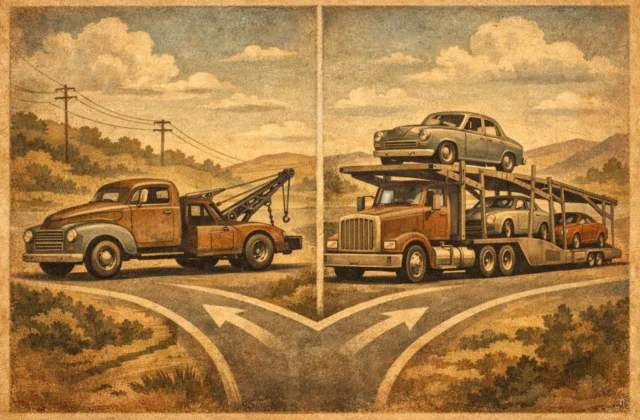
Compare towing versus vehicle transport for breakdowns, damaged cars and planned moves. Learn which option protects your vehicle,…
Read article