A crash rarely ends when the vehicles stop moving. For most drivers, the next problem starts straight away – the car will not drive, a wheel is bent, the steering feels wrong, or the police have asked for it to be moved. That is where an accident damaged car collection example helps. It shows what usually happens, what information matters, and how to get the vehicle moved without adding more stress to an already bad day.
If your car has taken front-end damage, side impact damage, suspension damage, or airbag deployment, the collection process depends on one thing first – can it roll and steer safely enough to load? That sounds simple, but it affects the type of recovery vehicle used, the loading method, and how quickly the job can be done.
A real-world accident damaged car collection example
Picture a common local callout. A driver is involved in a low-speed collision at a roundabout. Nobody is seriously hurt, but the front nearside of the car is damaged. The bumper is dragging, the wheel arch liner is rubbing the tyre, and the steering feels off. The engine still starts, but the driver sensibly does not want to risk driving it.
The first step is the call. The recovery operator asks for the exact location, the make and model, and the visible damage. They will usually ask whether the wheels turn, whether the handbrake is stuck on, and whether the keys are available. If the car is blocking traffic or sitting in a dangerous spot, that changes the urgency.
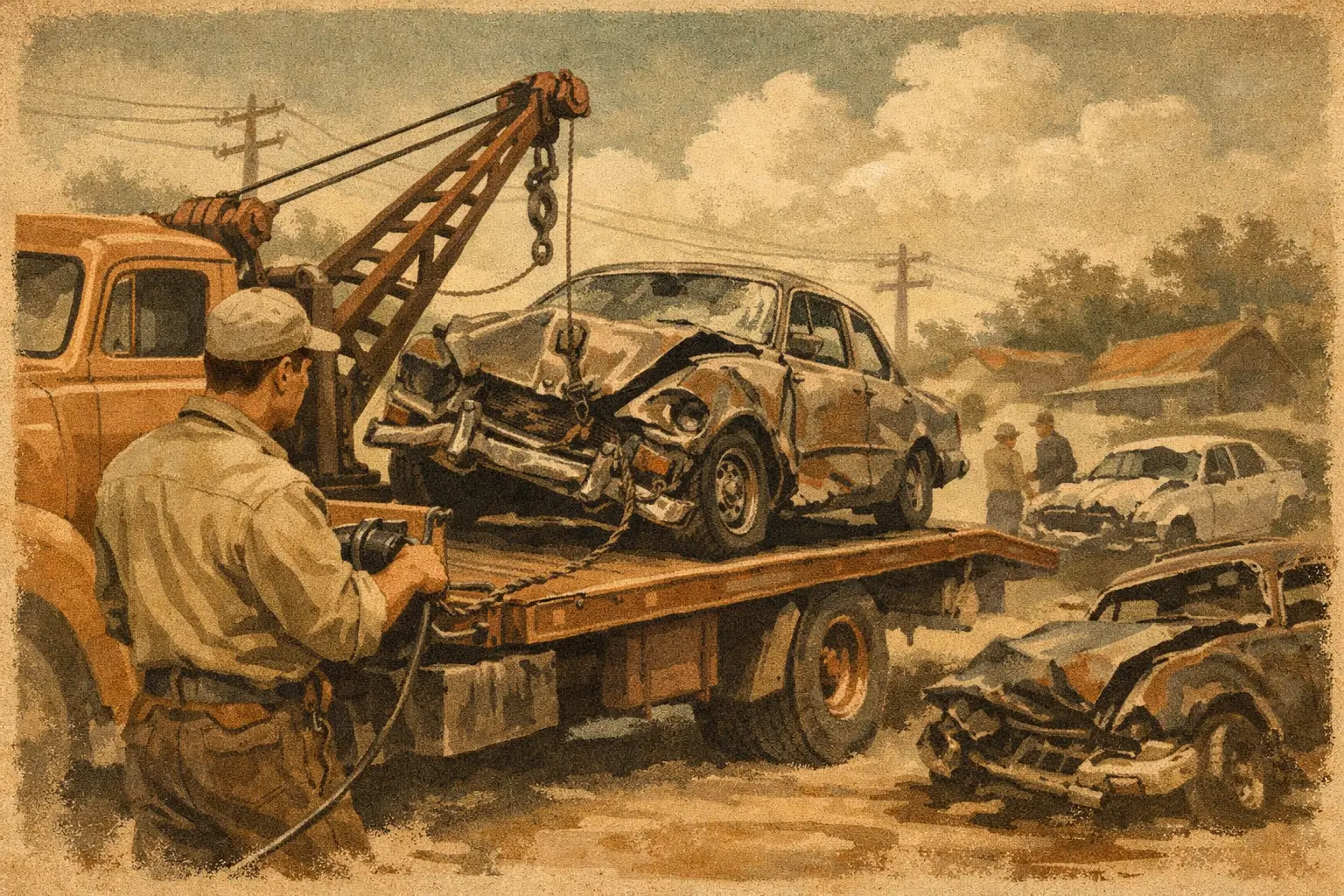
On arrival, the vehicle is checked before loading. In this example, the front wheel is still attached but sitting slightly out of line. The car can roll a short distance, but it should not be driven. Because of that, it is loaded onto a recovery lorry rather than towed with wheels on the road. That avoids dragging damaged suspension or causing further tyre and steering damage.
The operator secures loose trim, checks for fluid leaks, and uses the safest loading angle available. If the front bumper is hanging low, extra care is taken to avoid it catching on the bed. Once loaded, the car is strapped down at secure points and transported either to the driver’s home, a garage, or an insurer-approved site, depending on what the customer needs.
That is a straightforward accident damaged car collection example, but no two jobs are exactly the same. A car with rear damage and free-rolling wheels is often simpler than one with locked wheels or broken steering. The process changes with the condition of the vehicle.
What details make collection easier
Drivers often think they need to know every technical detail before calling. You do not. A clear basic description is usually enough to get the right vehicle sent out.
The most useful information is the registration, location, and whether the car rolls, steers, and has accessible keys. It also helps to say if the vehicle has a puncture after impact, deployed airbags, or bodywork rubbing on a wheel. If the car is in a car park with height restrictions, on a tight residential street, or in a live traffic area, mention that as well.
Photos can speed things up. A quick set of images showing the front, rear, both sides, and wheel position often tells the operator more than a long explanation. It helps avoid guesswork and cuts down delays.
When a damaged car needs more than a standard pickup
Some accident jobs are simple load-and-go work. Others need a more careful plan.
If a wheel is collapsed under the car, skates or specialist loading equipment may be needed. If the steering is locked due to impact damage, the loading angle and winching process become more important. If the car is automatic and stuck in park with no power, that can slow things down as well.
Electric and hybrid vehicles add another layer. After an accident, especially one involving battery impact or warning lights, handlers need to be cautious. Not every damaged EV can be treated like a normal petrol or diesel car. In some cases, the safest move is direct transport to a specific repairer or assessment point rather than temporary storage.
This is why the cheapest quote is not always the best one. If the vehicle is badly damaged, experience matters more than shaving a few pounds off the price.
Where the car usually goes after collection
There is no single answer because it depends on your situation.
If the car is repairable and you already have a garage in mind, it can often go straight there. If you are waiting on an insurer decision, home storage may be more practical if you have space and the vehicle is safe to leave there. If the damage is severe and repair is unlikely to be economical, some owners choose transport directly for disposal or salvage assessment.
For many drivers, the best option is the one that avoids double handling. Every extra move adds time, cost, and the chance of more hassle. If you know where the vehicle ultimately needs to be, say that early.
Common issues that affect timing and cost
People usually ask two things first – how fast can you get here, and how much will it cost?
The honest answer is that it depends on access, damage, and destination. A damaged hatchback on a normal roadside with free-rolling wheels is quicker to collect than a van with front and rear impact damage wedged in a multi-storey car park. Distance matters too, but condition matters just as much.
Time of day can affect response. Late-night recoveries, poor weather, and busy roads can all slow access. If police are involved or the vehicle is in a restricted location, that can add waiting time. None of that means the job cannot be done. It just means the operator needs the full picture to give an accurate estimate.
The biggest cost mistake drivers make is leaving out key details to get a faster quote. If the car later turns out to have locked wheels, no keys, or major underbody damage, the job may need different equipment. A clear description at the start is the quickest route to the right price.
Accident damaged car collection example with non-rolling wheels
Here is a second accident damaged car collection example, because this is where many recoveries become more technical.
A car has been hit while parked. The rear axle has shifted, one wheel is jammed against the arch, and the owner cannot move it off the street. In this case, the vehicle will not roll normally. The recovery operator arrives with the equipment needed to lift and load it without dragging the damaged wheel along the road.
Instead of trying to force movement, the operator positions the lorry carefully, uses winching in a controlled way, and places wheel skates beneath the affected corner. The car is then drawn onto the bed slowly, keeping the damaged area stable. This takes longer than a standard pickup, but it protects the vehicle and avoids making the damage worse.
That is a good example of why accident collection is not just about transport. It is about handling a compromised vehicle safely from the first contact to the drop-off point.
What you should do before the recovery vehicle arrives
Keep it practical. Remove valuables, gather your keys, and make sure you know where the car is going. If the vehicle is in a risky place, stay somewhere safe rather than standing close to traffic. If you cannot remain with the vehicle, let the operator know in advance.
It also helps to keep documents and expectations separate. The recovery job is to move the vehicle safely. Insurance, fault, and repair decisions can come afterwards. Drivers often feel pressured to sort everything at once, but the urgent part is making the car safe and getting it moved properly.
If you are in or around Peterborough and need a damaged vehicle collected quickly, having a local operator who knows the area can save time, especially on awkward estates, ring roads, and out-of-hours callouts.
Why a clear process matters after an accident
After a collision, people do not want a lecture. They want to know what happens next, how long it will take, and whether the car can be moved without more problems. A good recovery process answers those questions quickly.
The best service is not the one with the fanciest language. It is the one that turns up when promised, brings the right equipment, communicates clearly, and gets the vehicle where it needs to be. That is what drivers remember after a stressful day.
If your car has been damaged and you are not sure whether it can be driven, play it safe. A quick assessment and proper collection usually costs less than making the damage worse by trying to limp it home. When the car is bent, scraping, leaking, or simply not sitting right, getting it moved properly is the sensible next step.
Leave a Reply