June 9, 2026
Jump Start Service Peterborough Fast Help
Need a jump start service Peterborough drivers can rely on? Get fast 24/7 roadside battery help, clear pricing,…
Read article
A car that will not start rarely fails at a convenient time. It is usually on a work morning, outside the school gates, on a driveway blocking another vehicle, or in a car park with a ticket running. This non-starting car transport guide explains what to do next, how to move the vehicle safely, and what information helps recovery and transport teams get to you faster.
Not every non-starting car needs to be transported, but many do. If the issue is a flat battery and the car starts with a jump, you may be back on the road quickly. If the battery is dead again straightaway, the starter motor has failed, the engine will not turn over, the gearbox is stuck, or the steering is locked, driving it is no longer the sensible option.
Transport is often the better call when the fault is unclear, the vehicle is parked awkwardly, or you do not want to risk making the problem worse. That matters with modern cars. Repeated start attempts can drain the battery completely, trigger more warning lights, and leave you with less flexibility when help arrives.
There is also the practical side. If you need the car moved from home to a garage, from a roadside to your address, or from one site to another for repair, proper vehicle transport saves time and reduces stress. The same applies if the car has been standing for months and now will not move under its own power.
Before arranging recovery, check the basics if it is safe to do so. Look at whether the dashboard lights come on, whether the engine clicks when you turn the key or press the start button, and whether the gear selector moves normally. If it is a manual, note whether it rolls freely in neutral. If it is an automatic, see whether it will shift out of park.
You do not need to diagnose the fault. A simple description is enough. Saying “no lights at all”, “it clicks but will not start”, or “the wheels are locked” is far more useful than guessing the engine has failed.
It also helps to check access. Is the car on a steep drive, in an underground bay, facing into a wall, or parked in a tight space with little room in front? Transporting a non-starting vehicle is usually straightforward, but access and wheel condition can change the equipment needed.
A good non-starting car transport guide should save you time on the phone, so here is what matters most. Recovery teams usually need the vehicle make and model, your exact location, the destination, and whether the car rolls freely. They also need to know if there has been accident damage, a puncture, missing wheels, or anything affecting loading.
Be clear about the condition of the vehicle. A car that simply will not start is different from one with seized brakes or a snapped suspension component. Both can be moved, but the loading method may change.
If you have the keys, mention that too. If the keys are missing, the steering lock is on, or the car is stuck in park, say so early. It avoids delays and helps the operator plan the safest collection.
Most non-starting cars are moved using a recovery vehicle with a winch. The car is pulled carefully onto the bed and secured for transport. If the wheels roll and the steering works, loading is usually quick. If one or more wheels are locked, additional skates or other equipment may be needed.
This is why details matter. A transporter turning up for a standard pull-on job and finding a vehicle with locked brakes in a narrow bay can still often complete the move, but it will take longer and may need a different setup.
For drivers, the main point is simple. Do not try to force the car into motion with another vehicle and a tow rope unless it is genuinely safe and legal to do so. In many cases it is not the best answer, especially with automatics, electric handbrakes, steering faults, or poor road conditions.
Some faults are minor for transport purposes. A dead battery, failed alternator, starter issue, or electrical fault usually means the car can still be winched on without much trouble. Others need a bit more care.
Locked wheels are one of the biggest factors. If the handbrake is stuck on or the brakes have seized after the car has been parked for a long time, the vehicle may drag rather than roll. That can still be managed, but it needs the right equipment.
Low ground clearance is another issue. Some cars need careful loading angles to avoid scraping the front bumper or underside. Accident damage can also affect whether the vehicle tracks straight when being pulled.
Then there is location. A broken-down car on a wide road is one thing. A non-starter tucked in a multi-storey, behind another vehicle, or nose-first on a narrow drive is another. None of this makes transport impossible. It just changes how the job is approached.
If transport is booked, there are a few simple steps that make things smoother. Put the hazard lights on if needed and safe to do so. Make sure the handbrake status is known. Remove valuable items and any loose belongings that may slide about during loading.
If you are at home, clear space around the car where possible. Move bins, bikes, or anything else that could get in the way. If the vehicle is in a managed car park, let the site know a recovery vehicle is attending if that is required.
Keep your phone close and stay contactable. Delays often happen because operators cannot get through when they arrive, or the exact vehicle location in a large car park has not been confirmed.
People usually want the same answer first – how much and how soon? Fair enough. The price for moving a non-starting car depends mainly on distance, access, vehicle size, and whether the car rolls freely.
A straightforward driveway-to-garage move is usually simpler than a collection from a restricted site with locked wheels. Same-day and out-of-hours work can also affect timing and cost, though the main concern for most drivers is getting the car moved without hassle.
The quickest way to get an accurate quote is to give clear information from the start. Send the registration if asked, confirm the postcode, and mention any loading issues honestly. It is better to be upfront than to aim for the lowest quote and find the job cannot be completed as expected.
Speed matters, but so does capability. If your car will not start, you need a service that handles immobilised vehicles regularly, not just basic towing. That means understanding winching, tight access, wheel issues, and safe loading.
It also helps to choose a local operator who knows the area. In and around Peterborough, quick response is often the difference between a simple recovery and half a day lost waiting around. Clear communication matters just as much. You should know who is coming, roughly when, and what the next step is once the vehicle is loaded.
A service-led operator will ask the right questions early and keep the process simple. That is exactly what most drivers need when they are already dealing with enough.
There is a point where repeated attempts stop being useful. If the starter is clicking, the battery is fading, or you can smell petrol, stop and arrange proper help. The same goes if warning lights are flashing heavily or the car has just cut out after making unusual noises.
Trying again and again can flatten the battery fully and remove easier options. It can also make a roadside situation less safe if you are distracted, stressed, and still sitting in a poor location.
If you are unsure, treat it as a transport job first and let a garage assess the fault once the vehicle is somewhere safe.
A non-starting car does not always mean a major repair, but it does mean you need a sensible next move. Good transport is about getting the vehicle from problem to solution quickly, safely, and without adding another problem on top. If that means calling for recovery rather than fighting with it for another hour, that is usually the right decision.
Need recovery right now?
WhatsApp Us
Need a jump start service Peterborough drivers can rely on? Get fast 24/7 roadside battery help, clear pricing,…
Read article
Need a vehicle transport service Peterborough drivers can trust? Here is what to expect, when to book, and…
Read article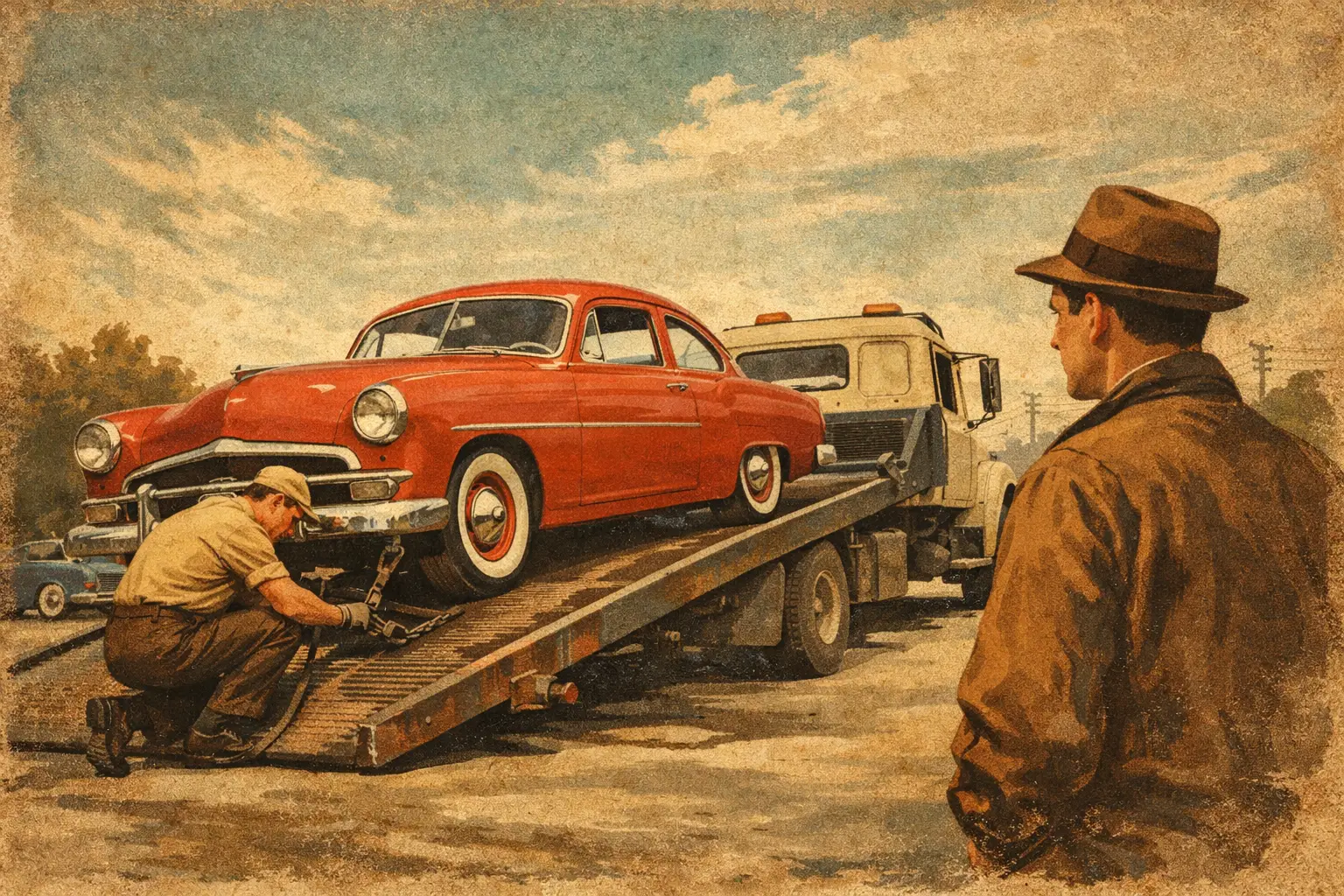
Learn how to transport non runner vehicles safely, legally and without hassle. Practical advice on towing, trailers, recovery…
Read article