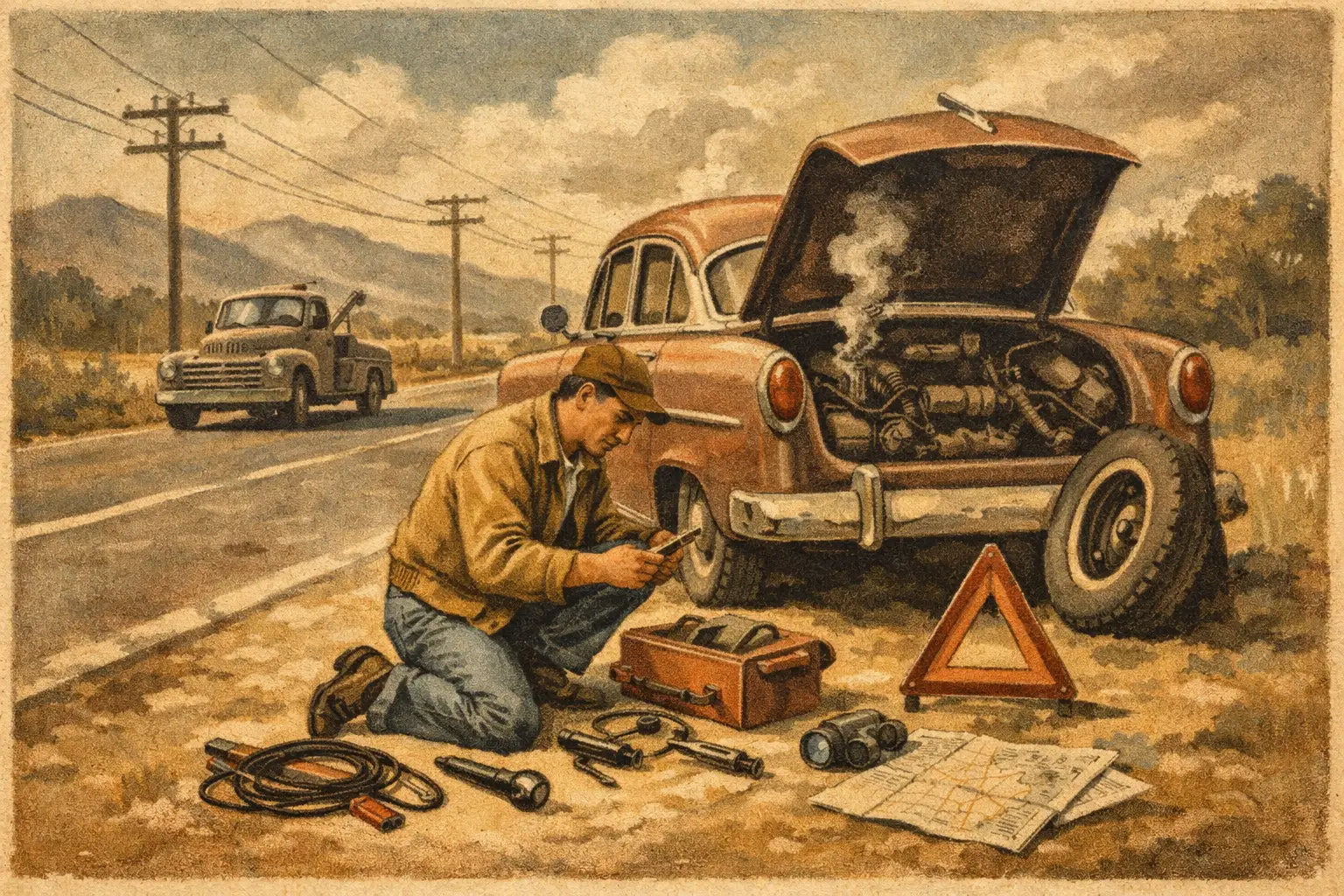
A flat battery in the dark, a warning light on a busy road, a puncture when you are already late – breakdowns rarely happen at a convenient time. This roadside breakdown checklist guide keeps things simple so you know what to do first, what to check next, and how to stay safe until help arrives.
The first priority in any breakdown
The first few minutes matter more than most drivers realise. Your goal is not to diagnose everything on the spot. It is to protect yourself, your passengers and other road users, then make it easier for recovery to reach you quickly.
If the vehicle is still moving, stay calm and look for the safest place you can stop. That might be a lay-by, a hard shoulder where legally permitted, a service area, or a quiet side road away from bends and fast traffic. Switch on your hazard warning lights as soon as you know there is a problem.
Once stopped, think safety before anything else. If it is safer to leave the vehicle, do so carefully and stand well away from traffic. If you are on a motorway or a fast A-road, this is especially important. If leaving the vehicle would put you in more danger, use your judgement and call for help straight away.
Roadside breakdown checklist guide: what to do step by step
A breakdown feels chaotic when you are in it, so a set order helps. Start with the basics.
Check your location first. A recovery driver can reach you much faster if you can give a clear pin, road name, nearby junction, or a visible landmark. On motorways, note the marker posts, gantry signs or emergency area details. In built-up parts of Peterborough, even a nearby shop, roundabout or industrial estate can speed things up.
Next, check whether the fault is obvious and safe to identify. Some problems are simple, such as running out of fuel, leaving lights on and draining the battery, or getting a puncture. Others are not. Smoke, a burning smell, fluid leaks, steering problems, overheating or accident damage mean you should avoid trying to drive any farther.
Then contact breakdown recovery. Give the operator the exact location, vehicle make and model, registration, the fault if known, and whether the car is in a dangerous position. Be clear about anything that affects loading, such as locked wheels, low suspension, accident damage or being stuck in a multi-storey car park.
Finally, keep your mobile phone available and stay where you can be found safely. If recovery needs to call for access details or a location update, a missed call can slow the whole job down.
What to keep in the car before a breakdown happens
A good checklist starts before the vehicle fails. You do not need to turn the boot into a workshop, but a few basics make a real difference.
Keep a high-visibility jacket, a torch, a mobile phone charger, drinking water and a basic first aid kit in the car. If you travel with children, add anything they may need if you are stuck longer than expected. In winter, a warm layer or blanket is worth having, especially if you drive early mornings or late at night.
It also helps to keep your locking wheel nut key, service contact details and insurance information easy to find. A surprising number of recovery delays come down to drivers not knowing where these items are when a tyre issue or vehicle move is needed.
If you use an older vehicle, a jump pack can be useful, but only if you know how to use it safely. The same goes for tyre inflators and puncture repair kits. These can save time in the right situation, but they are not a fix for every fault.
When you can wait for help and when you should stop driving immediately
This is where many drivers get caught out. Not every breakdown means instant recovery, but not every warning light should be ignored either.
A dead battery on your driveway is very different from loss of power in live traffic. A slow puncture may be manageable if you stop straight away somewhere safe. Grinding noises, overheating, sudden smoke, brake warnings, heavy steering or transmission problems are different. Driving on can turn a recoverable issue into major damage.
If the car feels unsafe, sounds wrong, smells hot, or becomes difficult to control, stop and arrange assistance. The cost and delay of recovery are usually far less than the cost of continuing until the vehicle fails completely.
There is also the practical side. If you are blocking a road, stuck in a dangerous position or unable to move at all, speed matters. In those situations, a direct-response local recovery service is often the fastest route back to safety.
The most common breakdowns and the right response
Flat batteries are one of the most common callouts. If the engine will not turn over, lights are dim, or you hear repeated clicking, a jump start may solve it. But if the battery keeps going flat, the real issue may be the alternator, battery age or an electrical fault.
Punctures are another regular problem. If you have a spare and know how to fit it safely, that may get you moving again. If you are on a busy road, in poor weather, missing the correct tools or dealing with a damaged alloy, waiting for assistance is often the better choice.
Running out of fuel sounds avoidable, but it happens more than people admit. The important thing is not to keep trying to start the vehicle over and over. That can make things worse on some cars. Fuel delivery is often the quickest fix.
Overheating needs more caution. If the temperature rises sharply or steam appears, stop as soon as safe. Do not open the coolant cap while the engine is hot. Even if the car restarts later, it may still need recovery if there is a leak or cooling system failure.
Accident damage brings its own checklist. A car may look drivable but have hidden suspension, steering or wheel damage. If the wheels are not sitting properly, the steering feels off, or bodywork is rubbing on a tyre, it needs transporting rather than driving.
A roadside breakdown checklist guide for different roads
Where you break down changes what makes sense.
On residential streets or car parks, you usually have more time to assess the problem and more space to wait safely. On fast roads, your options narrow quickly. Visibility, traffic speed and road layout all matter.
Motorways and dual carriageways require more caution than local roads. If you can reach a safe refuge area or leave at the next exit, do so only if the vehicle remains safe to control. If not, stop in the safest available place, use hazard lights, and get yourself behind a barrier if there is one and it is safe to reach.
Country roads can be awkward for a different reason. Narrow lanes, poor lighting and blind bends make it harder for other drivers to spot a stopped vehicle. Keep yourself visible and give very precise location details when calling for recovery.
What recovery will usually ask you
Drivers often feel flustered when they make the call, so it helps to know what information matters. Expect to be asked where you are, what the vehicle is, what has happened, and whether the car can roll and steer.
You may also be asked whether you have passengers, whether the keys are present, and whether the vehicle is in a car park, underground space or restricted access area. These details affect what type of recovery vehicle is sent.
If you are in or around Peterborough, local knowledge can help shave time off the response. A clear postcode is useful, but a known estate, retail park or junction often helps just as much.
Mistakes that make a bad breakdown worse
The biggest mistake is carrying on when the vehicle is clearly unsafe. Close behind that is stopping in a poor place when a safer one was only a short distance ahead. Panic decisions create extra risk.
Another common problem is giving vague location details. Saying you are near Peterborough is not enough if you are actually on a specific stretch of the A1, parked behind a unit on an industrial estate, or stranded in a supermarket overflow car park.
People also waste time searching for paperwork, wheel nut keys or mobile phone charge at the exact moment they need help. A few minutes of preparation at home saves a lot of stress on the roadside.
After the breakdown: what to sort out next
Once the vehicle has been recovered, think beyond the immediate tow. Ask what likely caused the fault, where the vehicle should go, and whether it is worth repairing before authorising more work. Sometimes a quick fix gets you back on the road. Sometimes the sensible choice is transport to a garage or home address for a proper inspection.
If the car is older or repair costs are climbing, this is also the point to think practically. Not every breakdown should lead to another repair bill. It depends on the vehicle’s value, condition and how reliable you need it to be day to day.
A breakdown is stressful, but it gets easier when you have a clear plan. Keep the basics in the car, know when to stop driving, and make the call early rather than late. A calm response usually turns a bad roadside moment into a manageable delay.
Leave a Reply