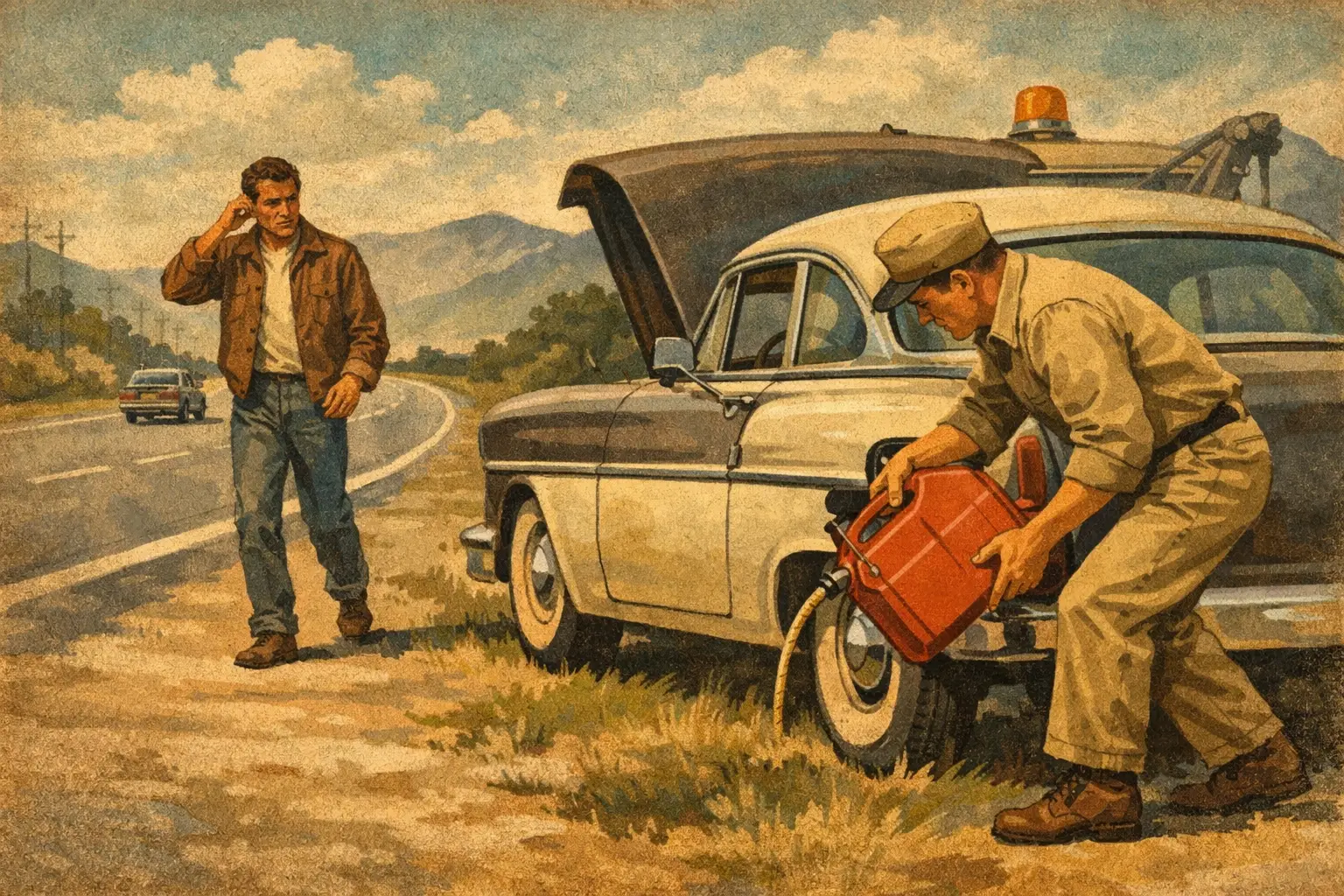
Running out of fuel rarely happens at a convenient moment. It is usually on the school run, on the way to work, late at night, or when you are already cutting it fine. If you need fuel run out roadside help, the main thing is to stay safe first and sort the vehicle second. A calm response saves time, reduces risk, and gets you back on the road with less hassle.
For most drivers, the problem starts with doubt. The fuel light has been on for a while, the range display still shows a few miles, and the nearest petrol station does not seem far. Then the engine loses power, warning lights appear, and the car rolls to a stop. At that point, trying to force it or guessing your next move can make a bad situation worse.
Fuel run out roadside help starts with safety
If your vehicle has stopped or is clearly about to stop, your first job is to think about where you are. A quiet residential road is one thing. A busy A-road, roundabout approach or dark rural stretch is another. Put your hazard lights on as soon as it is safe to do so.
If the car still has enough momentum, steer it to a safe position away from moving traffic. Ideally that means a lay-by, hard shoulder where permitted, or the side of the road with as much space as possible between you and passing vehicles. Once stopped, apply the handbrake and switch on your sidelights if visibility is poor.
Whether you stay inside the car or get out depends on the road and the risk around you. On a fast road, standing beside the vehicle is often the worst place to be. If you can leave safely and wait behind a barrier or well away from traffic, do that. If not, keep seatbelts on and call for help. If you have children, older passengers or pets with you, safety and visibility matter more than speed.
How to tell if you have really run out of fuel
Sometimes it is obvious. The fuel gauge is on empty, the engine sputtered, and the car shut down. Other times, it can look like a flat battery, electrical fault or mechanical issue. That matters because the right fix depends on the actual cause.
A fuel-related stop often comes with a few clear signs. The engine may hesitate under acceleration, lose power gradually, or cut out shortly after a warning light appears. Diesel vehicles can be especially awkward because once the system draws in air, simply adding fuel is not always enough to restart straight away.
If the car stopped suddenly with no warning, or if there are signs of smoke, overheating, odd noises or dashboard faults unrelated to fuel, it may be more than an empty tank. In that case, roadside help is still the right call, but the response may need recovery rather than fuel delivery alone.
What to do while you wait for help
Once you have called, keep things simple. Make a note of your exact location, nearby landmarks, road names and direction of travel. On unfamiliar roads this can save a lot of back and forth. If your mobile phone battery is low, stop unnecessary apps and keep the line free.
Avoid repeatedly trying to start the engine. With petrol cars, that can flatten the battery. With diesel cars, it can leave you with a more awkward restart if air has entered the fuel system. One or two checks are reasonable if you are certain you are in a safe place, but constant cranking rarely helps.
If it is dark, wet or cold, use what you have sensibly. Keep warm, stay visible and do not drain the battery with every electrical item running. If you are parked in a risky position, let the roadside operator know immediately so the response can be prioritised properly.
Is it better to walk to a petrol station?
Usually, no. It sounds like the quick fix, but it depends entirely on where you are. Walking along a busy road with a fuel can, especially at night or in poor weather, is not a good option. It is also easy to misjudge distance when you are stressed.
There is also the practical side. You need an approved fuel container, the right fuel type, and enough fuel to do more than just restart the engine. Put in too little and you risk stalling again before you reach a filling station. Put in the wrong fuel and you have created a much bigger problem.
Roadside fuel delivery is often the safer and faster option, especially when you are stuck somewhere exposed, travelling with family, or unsure of the nearest station. In places around Peterborough where roads can quickly shift from urban traffic to faster rural routes, that convenience is not just about comfort. It can be the difference between a simple delay and a risky situation.
What roadside assistance will usually do
Fuel run out roadside help is fairly straightforward when handled properly. The operator confirms your location, brings the correct fuel, adds enough to get you going, and checks whether the vehicle restarts normally. If it does, you can usually continue to the nearest filling station and top up properly.
If it does not restart, the reason is often still fuel-related, especially with diesel vehicles that need priming. In other cases, running out of fuel has exposed a separate issue, such as a weak battery or another fault that was already there. That is why a proper roadside service matters. It is not just dropping off a can and leaving.
If the vehicle cannot be restarted safely at the roadside, recovery may be the better next step. That is not always what drivers expect, but it is sometimes the most efficient option. A quick decision can save you from wasting more time on a verge or in a car park trying the same thing over and over.
Why diesel vehicles can be more awkward
Petrol and diesel do not behave the same when the tank runs dry. With many petrol cars, adding fuel is often enough to restart after a short wait. Diesel vehicles can be less forgiving. Once air gets into the fuel system, the engine may need priming before it will run again.
That does not mean every diesel fuel run-out turns into a recovery job. It just means there is less room for guesswork. Repeatedly turning the key and hoping for the best is not always the answer. If your diesel will not restart after fuel has been added, it needs the right approach rather than more attempts.
How to avoid running out again
Most drivers who run out of fuel do not do it because they are careless. It is usually a mix of routine, distraction and optimism. The gauge has been low before, the route is familiar, and the stop for fuel gets pushed back another ten minutes. Then traffic, diversions or cold weather change the maths.
The practical fix is boring but effective. Treat a quarter tank as your real refill point, not the warning light. Do not rely fully on the estimated range, especially in stop-start traffic or winter conditions. If you use your vehicle for work, school runs or longer commutes, build fuel stops into the week instead of leaving them to chance.
It also helps to know your car. Some gauges are more accurate than others near empty. Some reserve ranges are generous, others are not. If you have recently changed vehicles, do not assume it behaves like your old one.
When to call straight away
There are times when calling immediately is the obvious choice. If you are blocking traffic, stopped somewhere poorly lit, stranded with children, or unsure whether the issue is fuel or something more serious, get help on the way. The same applies if you are on a faster road, your mobile phone charge is limited, or the weather is making the situation worse.
A local 24/7 service is especially useful because response time matters more than theory when you are stuck. Car Recovery Peterborough handles this kind of call in a direct, practical way – confirm where you are, send help, and get you moving if it is safe to do so. That is what most drivers want when they are stranded. Not a lecture, just a solution.
The most common mistakes after running out of fuel
The biggest mistake is turning a simple problem into a bigger one. Drivers sometimes keep trying to restart the car, abandon it in a poor location, or accept help from someone without really knowing what fuel is being added. Under stress, small decisions can go wrong quickly.
Another common issue is underestimating how far the car needs to go once restarted. A small splash of fuel may start the engine, but it might not be enough to reach a petrol station comfortably, especially if traffic is heavy. It is better to get enough in the tank to remove the immediate risk and then refill fully as soon as possible.
Then there is misdiagnosis. If your car has stopped and the tank is low, it is easy to assume fuel is the only issue. Sometimes it is. Sometimes it is not. Good roadside help takes that seriously instead of making assumptions at the kerbside.
Running out of fuel feels avoidable because, in theory, it is. But when it happens, the right response is simple: get safe, do not guess, and get proper help to you quickly. A short delay is easier to deal with than a risky walk, a flat battery, or a vehicle stranded in the wrong place. The best next step is the one that gets you home with the least fuss.
Leave a Reply