A car that will not start always seems to fail at the worst time – outside work, on a school run, or half blocking a driveway when you need it gone. If you are searching for how to transport non runner vehicles, the main thing to know is this: the right method depends on why the vehicle will not move, where it is, and how far it needs to go.
Some non runners can be winched straight onto a recovery lorry in minutes. Others need extra care because the wheels are locked, the steering will not turn, or the vehicle has accident damage. Trying to force a quick fix often turns a simple move into a more expensive one, so it is worth getting clear on the safest option before you start.
How to transport non runner vehicles without making it worse
The biggest mistake people make is assuming every non runner can just be towed. Sometimes that works, but often it does not. Modern cars with automatic gearboxes, electronic parking brakes, low bumpers, or steering locks can be damaged if they are dragged incorrectly.
A proper vehicle recovery lorry is usually the safest choice because the car is lifted or loaded fully off the road. That matters if the fault is unknown, if the brakes are binding, or if the car has been standing for a long time. It also removes a lot of the legal and practical issues that come with rope towing.
If the vehicle is on your drive and simply needs moving to a garage, a trailer or transporter may be suitable. If it is stranded roadside, in a car park, or after an accident, recovery is normally the better route because access, safety, and speed matter more than keeping costs to an absolute minimum.
What counts as a non runner?
A non runner is not always a car with a dead engine. It can be any vehicle that cannot be driven safely from one place to another. That includes cars that will not start, vehicles with flat batteries that cannot be jump started, accident-damaged cars, vans with gearbox failure, and vehicles with broken suspension or steering faults.
It can also include cars that technically start but should not be driven. If the brakes are failing, a wheel is badly damaged, or warning lights point to a serious fault, driving it can create more damage and more risk. In those cases, transport is the sensible option even if the engine still runs.
Your main options for transporting a non runner
Recovery lorry
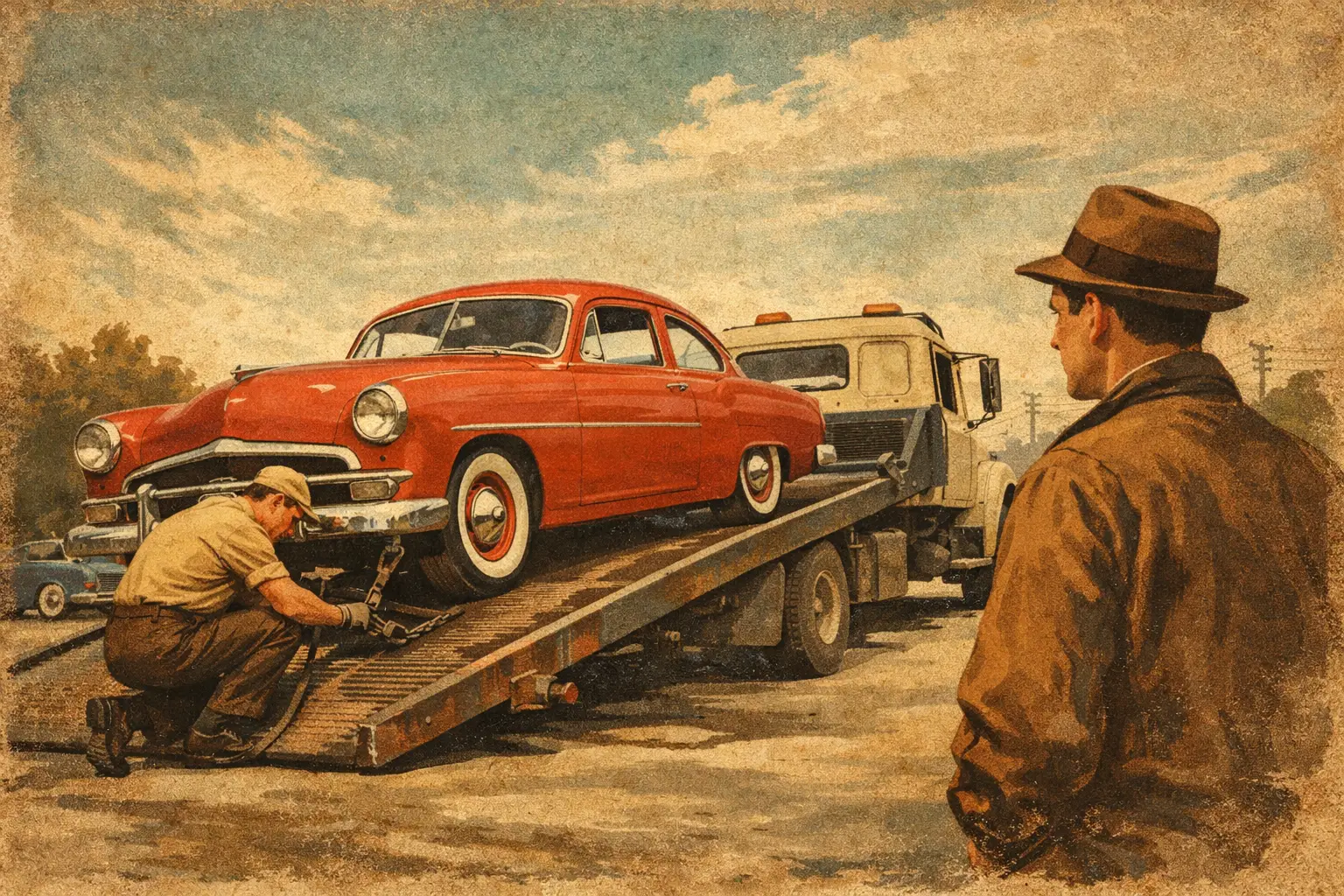
This is the most straightforward option for most people. The vehicle is loaded using ramps and a winch, then secured for transport. It is usually the best method for roadside breakdowns, accident recovery, and cars with unknown faults.
The advantage is control. A trained operator can load a car that will not start, has a flat tyre, or has limited movement. It is also faster than trying to arrange your own trailer, especially when you need same-day collection.
Trailer transport
A trailer can work well for planned moves, especially if you already have access to a suitable towing vehicle and the right licence entitlement. It can be cost-effective in some situations, but only if the non runner still rolls freely and can be loaded safely.
The downside is that loading a dead vehicle onto a trailer is harder than many expect. If the wheels are seized or the car is parked awkwardly, what looked simple on paper can quickly become a problem.
A-frame or rope towing
This is the option people often think of first because it seems cheap and quick. In reality, it is the least suitable method for many modern vehicles. You need proper control, legal compliance, and a car that can still steer and brake safely.
If the non runner has no power-assisted steering, poor brakes, or an electronic handbrake issue, rope towing is a poor choice. It may also be unsuitable over longer distances or on busy roads. For most drivers, professional recovery is safer and less stressful.
When towing is not the right answer
There are several situations where towing should be ruled out early. If the car has been in a collision, the wheel alignment may be badly out even if the damage looks minor. If a tyre has come off the bead, the suspension has collapsed, or the gearbox has failed, dragging it can do real harm.
Locked wheels are another common issue. A seized brake, failed bearing, or transmission fault can stop the car from rolling properly. In those cases, a recovery operator may need skates, specialist loading gear, or a different angle of approach. This is where experience saves time.
Ground clearance matters too. Sports cars, lowered cars, and vehicles with damaged bumpers can catch on ramps if the loading angle is too steep. A proper transporter setup reduces that risk.
What to check before the vehicle is moved
Before arranging transport, get a clear picture of the vehicle’s condition. You do not need to diagnose the fault fully, but a few details make a big difference. Does it start at all? Do the wheels roll? Is the steering unlocked? Has it been in an accident? Is it parked in a tight space or underground car park?
If you are booking recovery, these details help the operator bring the right equipment. It also helps avoid delays on arrival. A car on a clear driveway is one job. A van with locked wheels in a multistorey car park is another.
It is also worth removing valuables and personal items before collection. Recovery teams move vehicles, not contents, and it is always better to empty the car first if you can.
Legal and practical points people forget
One reason people ask how to transport non runner vehicles is because they want the cheapest legal option. Fair enough. But the cheapest route is not always the one with the lowest overall cost.
If you are using your own trailer, you need to think about towing limits, loading weight, tie-down points, and whether your vehicle is actually rated to tow that load. You also need to be confident that the non runner can be secured properly.
If you are thinking of rope towing, ask yourself whether the disabled vehicle can brake and steer safely in traffic. Ask too whether the journey is really suitable for that method. A short move on a quiet road is very different from crossing town in poor weather.
Professional transport avoids a lot of those issues because the operator handles the loading, securing, and movement as part of the job.
How much does it cost to transport a non runner?
It depends on distance, vehicle size, location, and condition. A straightforward move from a driveway to a local garage will usually cost less than roadside recovery for a damaged van with locked wheels. Out-of-hours callouts, difficult access, and specialist loading can also affect the price.
The fairest way to look at cost is this: you are paying for the right equipment, safe handling, and speed. If you try to improvise and end up damaging the car, blocking traffic, or wasting half a day, the saving disappears quickly.
For local drivers around Peterborough, this is why many choose direct recovery instead of trying to sort out a trailer at short notice. It is simply quicker, and when a car is stuck in the wrong place, quick matters.
Choosing the right service for the job
If the vehicle is broken down at the roadside, needs urgent collection, or has any issue beyond a simple non-start, professional recovery is usually the best fit. If it is a planned move and the car rolls freely, transporter or trailer options may be worth comparing.
The key is being honest about the condition of the vehicle. If you tell the recovery company exactly what is wrong, they can plan properly and give you a realistic quote. That means fewer surprises when they arrive.
A reliable operator should also be clear about timing. If you need same-day collection, say so. If the car is going to a garage, have the destination ready. The smoother the handover, the smoother the job.
How to make collection quicker on the day
Have the keys ready if you have them, even if the car will not start. Make sure the handbrake status is known if possible. Clear access around the vehicle if it is on a drive, and let the operator know about any low walls, narrow gates, or height restrictions.
If the car is at the roadside, stay safe first. Put yourself well away from traffic and avoid standing between vehicles. Recovery is meant to solve the problem, not create another one.
When a vehicle will not move under its own power, the best decision is usually the simple one: use the method that protects the car, keeps things legal, and gets it moved without delay. That is often less about finding the absolute cheapest option and more about getting the right help from the start.
Leave a Reply