July 9, 2026
Can Fuel Be Delivered Roadside?
Can fuel be delivered roadside? Yes - in many cases it can. Learn how roadside fuel delivery works,…
Read article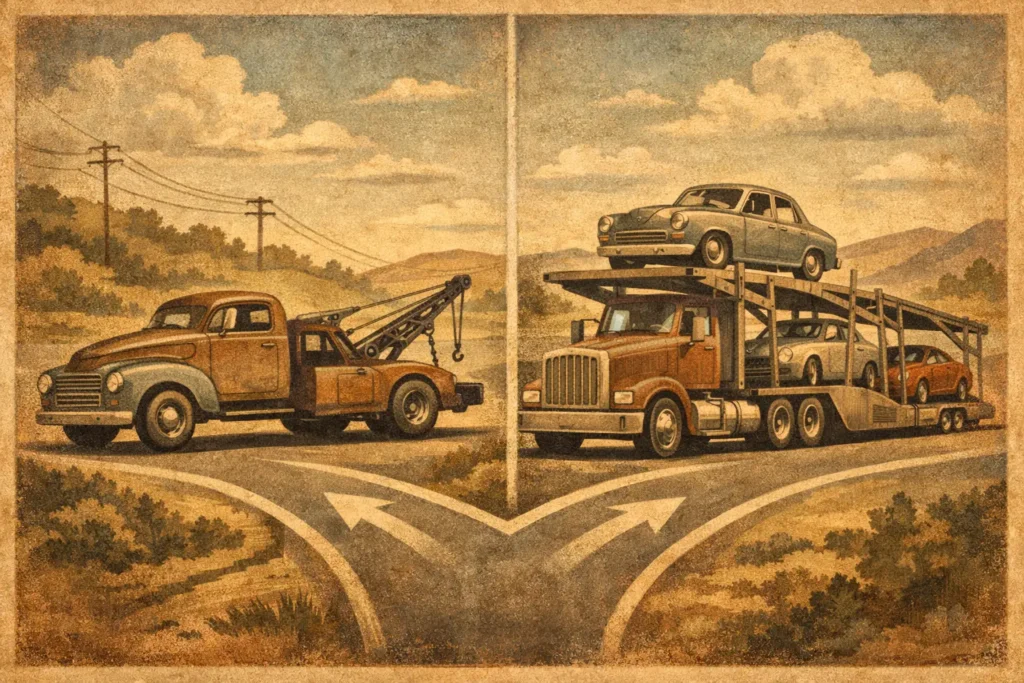
A car that will not start outside your home needs a different solution from a vehicle being moved across the county after a sale. That is the key point in towing versus vehicle transport. Both get a vehicle from A to B, but the method, risk and cost can be very different.
If you need help in Peterborough, choosing the right service starts with one question: is this an urgent recovery, or a planned move? Give the operator a clear picture of the vehicle’s condition, where it is and where it needs to go. You will get a more accurate quote and the right vehicle can be sent first time.
Towing means moving a vehicle with some or all of its wheels on the road. Depending on the setup, it may be lifted from one end or pulled using approved recovery equipment. It is most commonly used when a vehicle has broken down, needs to be removed from an unsafe position or requires recovery to a nearby garage.
Vehicle transport usually means loading the entire vehicle onto a recovery lorry, flatbed or transporter. The car is secured for the journey and none of its wheels need to roll on the road. This is often the better choice for non-runners, accident-damaged cars, vehicles with locked wheels, and planned collections.
Neither option is automatically better. The right choice depends on whether the vehicle can safely roll, steer and brake, the distance involved, and how quickly it needs to be moved.
Towing can be a practical answer when a vehicle has suffered a straightforward breakdown and needs moving a short distance. For example, a flat battery that will not respond to a jump start, an engine warning fault or a cooling issue may mean the car needs to go directly to a local repairer.
It can also help where access is tight. A car stranded on a narrow residential road, a busy roadside or a restricted car park may need to be moved quickly before a full collection can be arranged. Recovery operators assess the space, vehicle position and safety of the location before deciding how to proceed.
The main advantage is speed. In an urgent situation, the goal is to get you and your vehicle out of harm’s way and to a suitable destination without unnecessary delay. If the car is mechanically sound enough to be moved in this way, towing may be the most efficient option.
That said, a vehicle should not be towed simply because it is nearby. Problems with steering, braking, wheel damage or transmission can make it unsuitable. An experienced recovery operator will ask the right questions rather than guessing.
Modern cars can be less forgiving than they look. Automatic vehicles, electric vehicles, four-wheel-drive models and cars with low ground clearance may have specific recovery requirements. Moving them with the wrong wheels on the road can cause further damage.
A car with a wheel hanging loose after a collision, a seized brake, a snapped suspension component or a locked steering wheel also needs more than a quick pull. In these cases, full vehicle transport is usually the safer route. Tell the recovery company about any known issue before collection, even if it seems minor.
Vehicle transport is designed for cars that cannot, should not or simply do not need to be driven. The vehicle is winched or loaded onto a suitable bed, secured correctly and delivered to its destination. It removes the concern of tyres, drivetrain components or damaged wheels being forced to travel on the road.
This makes it a strong option after an accident. Even where the bodywork damage appears light, there may be unseen damage underneath. A bent wheel, leaking fluid, damaged suspension or impaired steering can turn a short journey into a bigger repair bill.
Transport is also useful for planned jobs. Perhaps you have bought a non-running car, sold a vehicle with no MOT, need to move a project car, or want a scrap vehicle collected without the hassle of arranging a driver. A scheduled collection gives you a clear time window and avoids the risk of trying to make an unsuitable vehicle roadworthy for one final trip.
For longer distances, putting the whole car on a transporter is often the more cautious choice. It keeps mileage off the vehicle and limits exposure to road debris, weather and mechanical stress. This matters particularly for older cars, prestige vehicles and vehicles that have been standing for a long time.
A fair quote is based on the actual recovery job, not just the postcode. Distance matters, but so do the vehicle condition, access, urgency and equipment required.
A car parked on level ground with free-rolling wheels is usually simpler to collect than one wedged in a multi-storey car park with a flat tyre and locked steering. Accident damage, missing wheels, underground car parks, narrow lanes and out-of-hours collection can all affect the work involved.
Be ready to provide the registration, make and model, collection and delivery locations, and a plain description of the fault or damage. Mention if the car is automatic, electric, lowered, modified, parked in a restricted area or unable to roll. Photographs can help where the vehicle has collision damage or difficult access.
The cheapest figure is not always the most useful figure if it does not cover the right equipment or leaves you waiting for hours. A clear quote should match the real condition of the vehicle and the collection requirements.
A breakdown recovery is time-sensitive. You may be on the roadside, blocking access, stranded outside work or unable to get home. The priority is safe removal and prompt support. In this situation, calling for help early is usually better than trying repeated repairs at the kerbside or asking a friend to pull the vehicle.
A planned transport job is different. You may have more flexibility over collection time, loading location and delivery arrangements. That allows the operator to prepare for the vehicle type and gives you time to make sure keys, documents and destination access are ready.
The two services can overlap. A car that breaks down today may need recovery to your home, then scheduled transport to a specialist garage later. What matters is using the safest method at each stage rather than treating every move as the same job.
Before the recovery vehicle arrives, remove valuable belongings and make sure the keys are available. If possible, park or position the car where it can be accessed safely without blocking traffic. Do not attempt to force a damaged wheel to turn or move a vehicle that is leaking fuel or other fluids.
At the destination, check that there is enough space to unload. Let the garage, buyer or property owner know the vehicle is coming, especially if delivery is outside normal hours. A few details shared at booking can prevent a failed collection or an avoidable delay.
If the vehicle is on a public road after an accident, prioritise your own safety. Move away from live traffic where safe to do so and follow any advice from emergency services. Recovery can be arranged once the location and condition of the vehicle are clear.
Towing works well for some urgent, straightforward recoveries. Vehicle transport provides greater protection when a car is damaged, non-running, difficult to move or travelling further afield. A good recovery service will not force one option onto every vehicle. It will assess what has happened and use the method that gets the car moved safely.
When you need a collection, do not worry about using the perfect technical term. Explain whether the car starts, rolls, steers and brakes, then say where it is. Car Recovery Peterborough can use that information to arrange the most suitable 24/7 recovery or transport option and get the job moving without unnecessary complications.
Need recovery right now?
WhatsApp Us
Can fuel be delivered roadside? Yes - in many cases it can. Learn how roadside fuel delivery works,…
Read article
Can you tow automatic car safely? Learn when it is possible, when it is risky, and the safest…
Read article
Need non runner collection Peterborough drivers can book fast? Get same-day help for immobilised, damaged or unwanted vehicles…
Read article