A car that will not start is one problem. A car that will not start and needs to be moved is a different job altogether. If you are searching for how to move non runner vehicles, the first thing to know is this: the safest method depends on why it will not move, where it is parked, and whether the wheels, brakes or steering are affected.
Sometimes the answer is simple. Sometimes trying to push or tow it makes the situation worse. If the car is stuck in a bay, blocking a driveway, sitting at the roadside or has been damaged in an accident, the right approach saves time and avoids extra repair costs.
How to move non runner vehicles without causing damage
There is no one-size-fits-all method. A non runner might have a flat battery and roll freely, or it might have seized brakes, locked steering, transmission trouble or accident damage. From the outside, those situations can look similar. In practice, they need different handling.
If the vehicle rolls, steers and brakes normally, it may be possible to push it a short distance on private ground with enough help and proper control. That is very different from moving it on a public road. Once you are dealing with traffic, tight access, hills, or any uncertainty about the car’s condition, recovery equipment is usually the safer option.
Trying to improvise is where people get caught out. A rope tow sounds cheap until the front wheels lock, the bumper gets damaged, or the car behind cannot brake properly. What looked like a quick fix becomes a longer, more expensive problem.
Start with the reason the car is a non runner
Before you decide how to move it, work out what has actually stopped it. If it is only a flat battery, a jump start may solve the issue and remove the need to transport it at all. If there is no fuel, fuel delivery might be enough. If the engine turns over but will not fire, or there are warning lights, smoke, fluid leaks or mechanical knocking, driving it could do more harm.
Brake and steering faults matter even more than the engine problem. A vehicle with locked brakes, an electronic handbrake fault or steering that will not release is not something to drag about casually. The same goes for cars with punctures, broken suspension or impact damage after a collision.
This is where being realistic helps. If you do not know whether the car is safe to roll, assume it needs proper recovery rather than guessing.
Can you push a non runner?
Yes, sometimes, but only in very limited conditions. It needs to be a short move, on level ground, with clear space, working steering and at least enough brake control to stop safely. You also need enough people to control the vehicle, not just shift it.
Even then, pushing is best treated as a positioning move rather than a transport solution. For example, moving a car a few metres out of a tight spot or onto easier loading ground may be reasonable. Pushing it down a road, across busy access routes or on any sort of slope is where risk rises quickly.
Modern cars add another complication. Some automatic gearboxes, electronic parking brakes and steering locks do not behave kindly when the battery is dead. What should roll may not roll. Forcing it can cause damage.
Can you tow a non runner with another vehicle?
Sometimes legally possible does not mean practically sensible. Towing a non runner with a strap or rope depends on the vehicle condition, the route, the driver’s experience and whether the towed car can steer and brake properly. If any of those pieces are missing, it is the wrong method.
Automatic vehicles are a common issue. Many should not be towed with driven wheels on the ground for any distance because of gearbox damage. Electric and hybrid vehicles can have manufacturer-specific restrictions too. If you are unsure, stop there.
There is also the matter of control. In a dead vehicle, brake assistance and power steering may be reduced or completely absent. That means the person in the non runner needs much more force to steer and stop than they would normally expect. In traffic, that is not a small detail.
For a short emergency reposition on private land, towing may be workable. For public roads and unknown faults, a recovery lorry is usually the safer and cleaner answer.
The safest way to move a non runner
In most real-world situations, the safest way to move a non runner is by professional recovery. That usually means a flatbed or spec lift depending on the vehicle condition, access and type of fault.
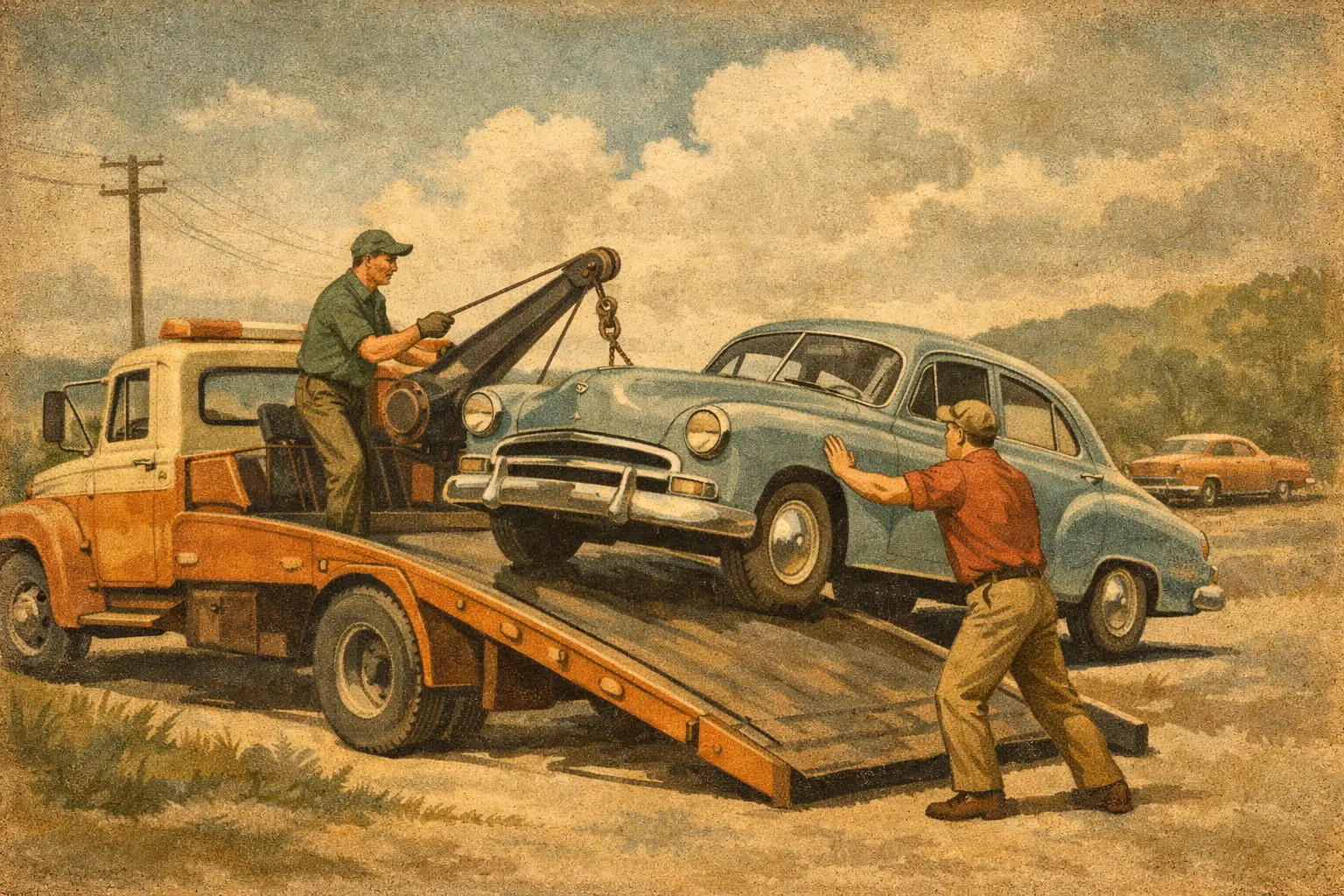
A flatbed is ideal when the car should not have its wheels turning, when there is damage, or when you want the least risk during loading and transport. This is often the best choice for automatics, prestige cars, low-clearance vehicles and accident-damaged cars.
A wheel-lift or spec lift can work well for some short-distance recoveries, but suitability depends on the vehicle and the fault. If brakes are binding or wheels are locked, extra equipment may be needed to load it safely. That is why a quick phone assessment matters. The right operator will ask the basic questions first, not just turn up and hope for the best.
What to check before moving a non runner
A few details make the recovery faster and smoother. Check whether the car is in gear or in park, whether the handbrake is on, whether the steering unlocks, and whether any wheel is damaged or stuck. If you have the locking wheel nut key, keep it handy. If the car has gone flat in an awkward place, note whether there are height restrictions, narrow access points or tight turns.
It also helps to remove valuables and have the keys ready. If the battery is completely dead and the car uses an electronic release for the boot or gear selector, mention that early. The same goes for lowered cars or vehicles with body kits, because loading angle matters.
None of this is about making the job difficult. It is about avoiding wasted time when you need the car moved quickly.
How to move non runner cars from home, work or the roadside
The location changes the method. A non runner on your driveway is usually easier to recover than one stuck in a multi-storey, on double yellows or half on a busy road. At home, the main issue is often access. At work, it may be permission and timing. At the roadside, safety becomes the first priority.
If you are on a live road, get yourself somewhere safe if possible and avoid standing between vehicles. Put your hazard lights on if they still work. If it is dark, wet or visibility is poor, do not spend long trying to diagnose it at the kerb.
For local drivers in Peterborough and the surrounding PE areas, fast response matters because many breakdowns are less about the fault itself and more about where the car has failed. A non runner outside your house is inconvenient. A non runner in a dangerous position needs recovery, not trial and error.
When recovery is better than repair on the spot
People often ask whether the car can just be fixed where it sits. Sometimes yes. A flat battery, empty tank or minor issue can often be sorted there and then. But once the fault is unclear, repeated start attempts are rarely helpful.
If the engine is not turning properly, fluids are leaking, warning lights are stacked up, or there has been an accident, moving straight to transport is usually the smarter call. It gets the vehicle somewhere safe and gives you space to deal with the next step properly, whether that is a garage, home address or onward collection.
That is especially true if time matters. If you need the car off a site, out of a parking area or moved the same day, recovery keeps the process simple.
The cheapest option is not always the least expensive
This is where many drivers get stung. Borrowing a tow rope or trying to drag a car with a mate’s van can look cheaper than booking recovery. But if it damages the gearbox, scrapes the bumper, cracks a wheel arch or creates a roadside incident, the cost changes quickly.
A proper recovery quote should factor in the actual condition of the vehicle and the collection point. That means the price reflects the right equipment and enough time to load it safely. It is a practical cost, not an extra.
If your car is not worth repairing, transport still matters. A non runner often needs moving for sale, scrap collection, garage inspection or relocation. The vehicle may be at the end of its life, but you still want it removed without hassle.
If you are stuck with a car that will not start and needs to go today, keep it simple. Tell the recovery operator whether it rolls, whether the steering works, whether the brakes are free, and where it is parked. Good information gets the right vehicle sent out first time.
When a car will not run, the goal is not to force it into motion. The goal is to move it safely, with the least stress and the least chance of making a bad day worse.
Leave a Reply