You realise the car has no tax after it has already become a problem. Maybe it will not start. Maybe you have bought it from someone across town. Maybe it is booked in for repairs or an MOT and now you are wondering whether moving untaxed car legally means you can drive it, tow it, or need it transported. That answer depends on why the car is being moved, where it is going, and whether it is actually roadworthy.
This is where people get caught out. A vehicle being untaxed does not automatically mean it can never go on the road, but it also does not mean you can just take a chance and hope for the best. The rules are narrow, and if the vehicle is uninsured, unsafe, or heading anywhere other than a permitted destination, the cost of getting it wrong can be far more than the cost of proper transport.
When is moving untaxed car legally allowed?
In the UK, there is one main situation where an untaxed vehicle can usually be driven on the road legally. That is when it is travelling to or from a pre-booked MOT test. The booking needs to be genuine, and the journey needs to be direct. If you are stopped, you should be able to show where the vehicle is going and why.
That exception is useful, but it is not a free pass. The car still needs to be insured, and it still needs to be in a condition that makes it safe to drive. An untaxed vehicle with faulty brakes, dangerous tyres, or steering problems is not made legal just because it has an MOT booking. If the car is clearly unroadworthy, driving it there can still lead to prosecution.
There is another detail people often miss. Driving an untaxed car to a garage for repairs is not treated the same way as driving to a pre-booked MOT. If the destination is a workshop and not an MOT test centre, you should not assume the same exemption applies. In most cases, if it cannot be taxed and legally driven, the safer option is transport by recovery vehicle.
The difference between untaxed, uninsured and off-road
Untaxed is only one part of the picture. Some owners also have a SORN in place, which means the vehicle has been officially declared off the road. A SORN vehicle should not be driven or even parked on a public road. The usual exception for a pre-booked MOT still applies, but again, only if the vehicle is insured and roadworthy enough for that journey.
Insurance matters just as much as tax. Even if you are driving to an MOT, you still need valid insurance cover for that specific vehicle. Trade plates, temporary cover, or existing policies do not always apply in the way people assume. If there is any doubt, check before moving it.
Then there is roadworthiness. This is the point that changes the whole decision. If the engine cuts out, the battery is flat, the wheels are damaged, the steering has locked, or the vehicle has been in an accident, the legal question stops being just about tax. At that stage, it is usually not suitable to drive at all.
When you should not drive an untaxed car
If the car is not booked in for an MOT, do not drive it on the road untaxed. If it is booked in but has obvious defects that make it unsafe, do not drive it. If it has no insurance, do not drive it. And if your plan involves stopping off elsewhere first, that starts to move away from a direct permitted journey.
This matters because roadside cameras and checks are routine. An untaxed vehicle can be flagged quickly, and explaining it afterwards is much harder than sorting it properly before the move. What looks like a short, low-risk trip often becomes expensive once fines, seizure fees, or penalty points enter the picture.
For many people, the practical answer is simple. If there is any grey area, have the vehicle recovered or transported instead of driven.
The safest way to move an untaxed vehicle
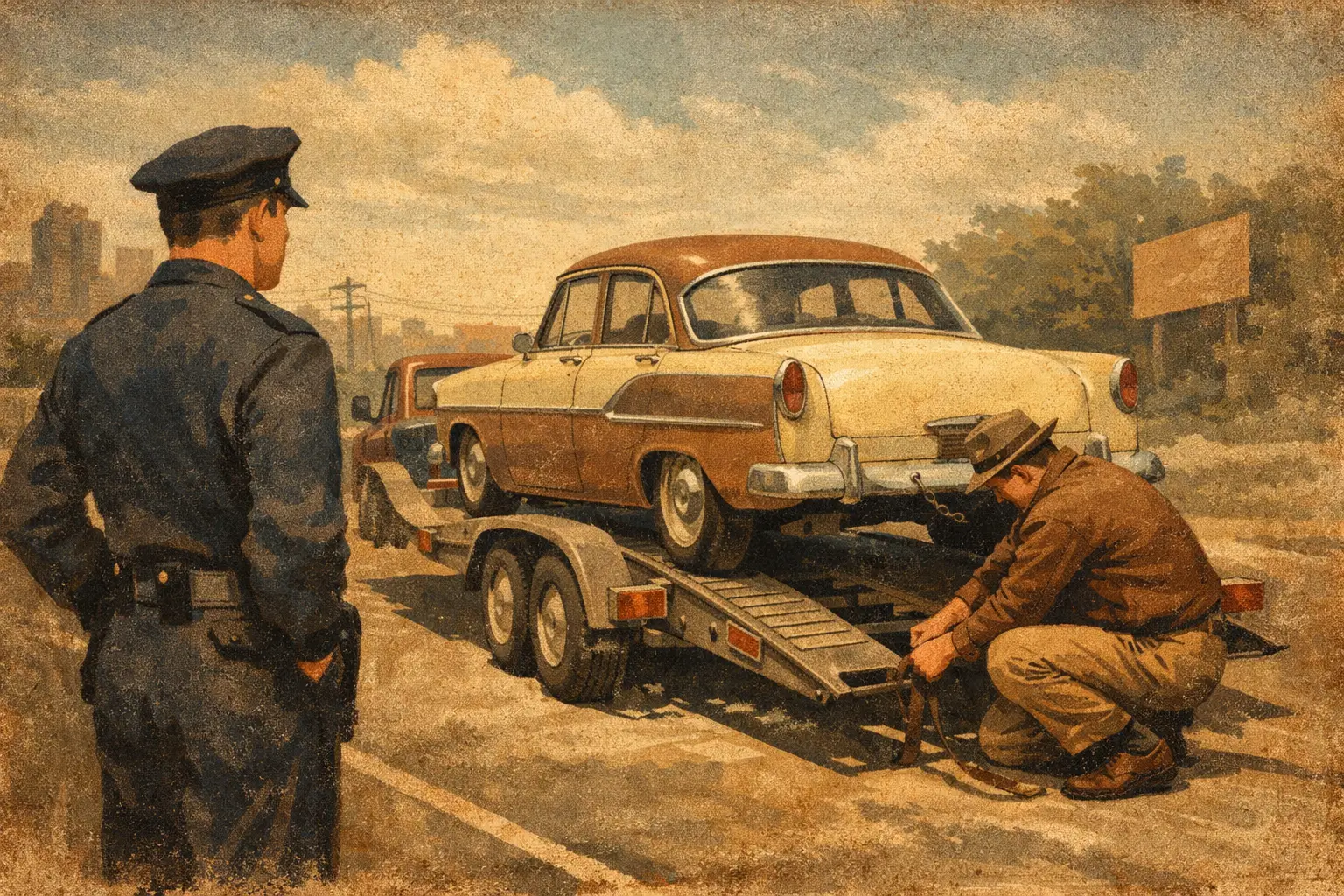
If the car cannot legally be driven, professional transport is usually the cleanest option. That could be a recovery lorry, flatbed, or specialist vehicle transport depending on the condition of the car. The key point is that the untaxed vehicle is not being used on the road under its own power.
This is often the right option when you have bought a non-runner, when a vehicle has been sitting unused for months, or when it has failed an MOT and needs to go elsewhere. It also makes sense if the car has no battery power, no valid MOT, seized brakes, wheel damage, or accident damage.
A proper recovery operator can collect from a house, workplace, roadside, storage yard, garage or auction site and move the vehicle without putting you in a risky legal position. That is far less hassle than trying to work around the rules or arrange short-term fixes just to get it moving.
Moving untaxed car legally after buying it
Buying a car is one of the most common situations where this comes up. Vehicle tax does not transfer with ownership in the UK. So even if the previous owner had tax in place, the car becomes untaxed as soon as the sale is completed.
That catches buyers out all the time. They assume they can just drive it home because it was taxed that morning. They cannot. You would need to tax it before driving it away, and that usually means the vehicle must meet the usual requirements, including insurance and, if needed, a valid MOT.
If the car has no MOT, cannot be taxed yet, or is not in a fit state to drive, transport is usually the right move. The same applies to project cars and vehicles bought as repairs. Getting it collected on a transporter is often faster than trying to solve each legal issue at the seller’s address.
What about towing an untaxed car?
People sometimes think towing changes everything. It does not necessarily. Towing rules are their own issue, and an untaxed vehicle being towed on public roads can still create problems depending on how it is being moved and whether it is treated as a trailer or a motor vehicle.
More importantly, towing an unroadworthy car is often a bad idea in practice. If the brakes, steering, tyres or suspension are not sound, towing can be unsafe as well as legally questionable. For short private-land moves, it may be workable. For public roads, recovery transport is usually the safer route.
A simple way to decide
Ask yourself three questions. Is the journey only to or from a pre-booked MOT? Is the car insured? Is it genuinely roadworthy enough to be driven safely? If the answer to any one of those is no, do not drive it.
That does not mean you are stuck. It just means the move needs to be handled properly. In practice, many untaxed cars need lifting, winching, or full transport anyway. Once a vehicle has been sitting, broken down, or damaged, trying to nurse it along the road often creates more delay, not less.
For drivers in Peterborough and surrounding areas, this is usually where a local recovery service earns its keep. Quick collection, clear pricing, and same-day transport can solve the problem without the guesswork.
Common mistakes that cost people money
The first mistake is assuming a short distance makes it acceptable. It does not. The second is thinking an MOT booking covers any journey connected to repairs. It does not. The third is forgetting that insurance and roadworthiness still apply even where tax rules allow an MOT trip.
Another common one is buying a car and planning to sort the paperwork later. Later is too late if you are already on the road. And finally, some owners leave an untaxed car parked on the street outside their house, assuming that because it is not being used, it is fine. If it is on a public road, it still needs to meet the legal requirements unless a specific exemption applies.
If you are unsure, play it straight
There are situations where the rules are clear, and others where people convince themselves they probably will be fine. That second category is where trouble usually starts. If the car is untaxed and the journey is anything other than a direct, insured, roadworthy trip to a pre-booked MOT, proper vehicle transport is normally the safer answer.
It saves the argument at the roadside, avoids unnecessary risk, and gets the vehicle where it needs to be without turning a simple move into a bigger problem. When time matters, the quickest option is often not driving it yourself. It is getting it moved properly and getting on with the next step.
Leave a Reply