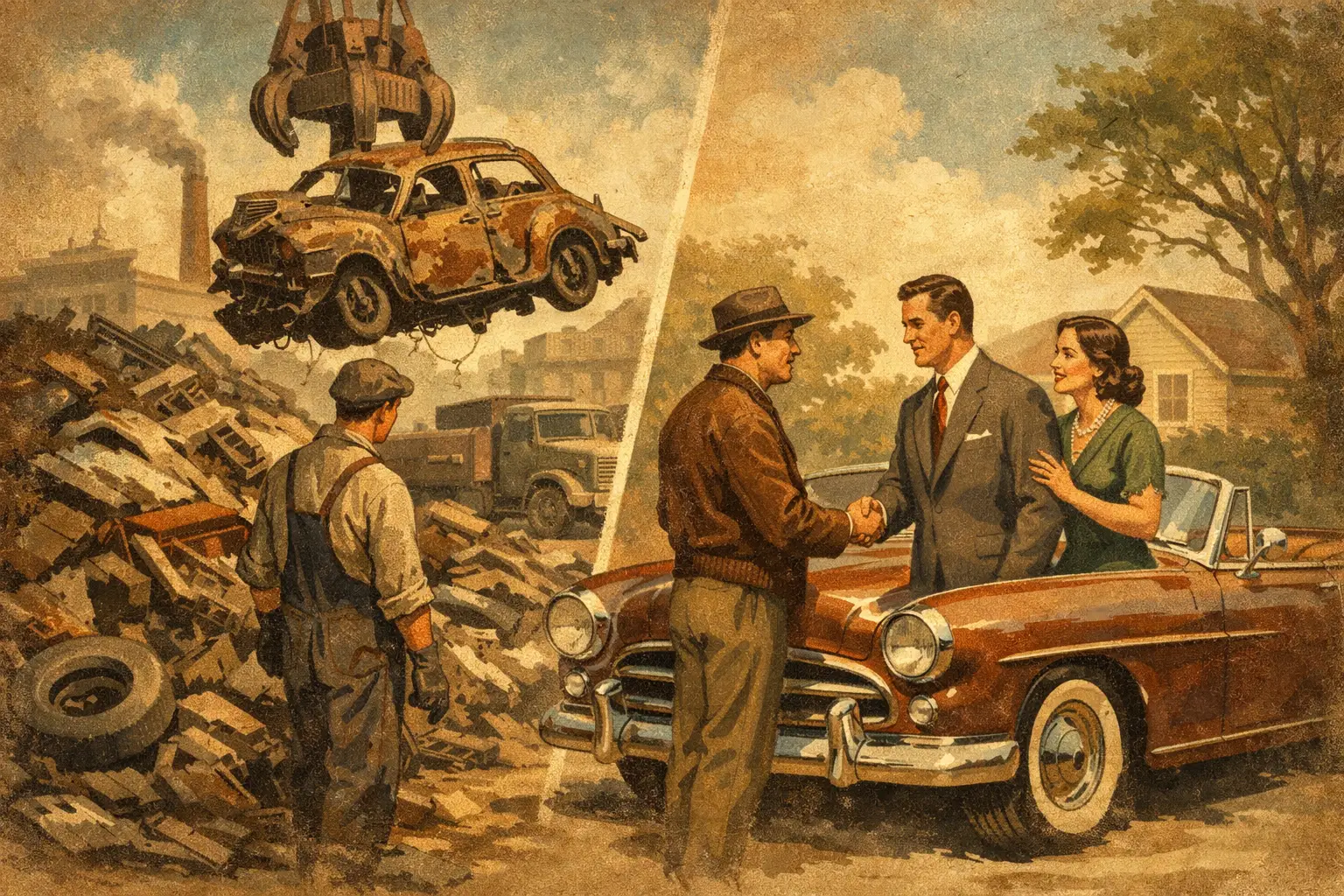
A car that will not start, has failed its MOT, or is just taking up space on the drive usually leaves you with one question: scrap collection or private sale? The right answer depends on the car’s condition, how quickly you need it gone, and how much effort you are willing to put in. If you want a clean, fast outcome, the best choice is not always the one that looks most profitable at first glance.
For many vehicle owners, the real issue is time. A car with flat batteries, body damage, warning lights, missing paperwork or mechanical faults can be hard work to sell privately. What sounds simple on paper often turns into messages that go nowhere, no-shows at the door, and buyers trying to knock the price down once they arrive. On the other hand, scrap collection is built for speed and convenience, especially when the car cannot be driven.
When scrap collection makes more sense
Scrap collection is usually the better route when the car is genuinely at the end of its life. That could mean major engine trouble, gearbox failure, accident damage, electrical faults, severe corrosion, or an MOT failure that would cost more to fix than the car is worth. In that situation, waiting around for a private buyer can waste days or weeks with little to show for it.
There is also the practical side. If the wheels are locked, the steering is damaged, or the vehicle is parked up and immobile, selling privately becomes much less realistic. Most private buyers want a car they can inspect, test, and drive away. Once that is off the table, the pool of buyers gets much smaller, and the price they offer often drops with it.
A proper scrap collection service removes that problem. The vehicle can be picked up from your home, workplace, roadside or garage, and you do not have to arrange transport separately. For people who need the vehicle gone quickly, that matters more than chasing the last possible pound.
When a private sale could be worth it
A private sale can still make sense if the car has life left in it. If it runs, has service history, holds an MOT, and only needs minor work, you may get more selling it directly to another driver. That is especially true for popular makes and models where demand is steady and parts are affordable.
Private sale also suits owners who are not in a rush. If you can clean the car, take proper photos, answer messages, and wait for the right buyer, there is usually more room to negotiate a better price. But the trade-off is effort. You are taking on the advertising, the viewings, the questions, and the risk of wasted time.
There is another point people often miss. Not every car that looks tired should be scrapped, and not every car that still starts is worth selling privately. Age, mileage, repair costs and local demand all affect the outcome. A ten-year-old car with a few cosmetic marks may still sell well. A newer car with heavy accident damage may not.
The hidden costs of a private sale
On paper, private sale often appears to bring in more money. In reality, the gap can shrink once you factor in the hassle. If the car needs valeting, a replacement battery, temporary insurance for viewings, minor repairs, or transport to a safer location, your costs start adding up.
Then there is the time cost. If you are dealing with repeated enquiries, arranging viewings after work, and waiting on buyers who never turn up, the process becomes less attractive very quickly. For some owners, especially if the vehicle is already off the road, same-day collection is worth more than a slightly higher asking price that may never be achieved.
Scrap collection or private sale for non-runners
If the vehicle does not start, the balance usually tips towards scrap collection. Non-runners are difficult to market privately unless the model is especially desirable or easy to repair. Most buyers see a non-starting car as a risk. They assume the worst, budget low, and expect to collect it on their own terms.
That can leave you stuck with a vehicle that nobody wants to move. In those cases, scrap collection is straightforward. You get a quote, arrange collection, and the vehicle is removed without needing to make it roadworthy first. For owners in Peterborough dealing with a dead car on the drive or a failed vehicle at a garage, that speed can be the main advantage.
Condition matters more than sentiment
A lot of people hold on to an old car because they have had it for years, or because they remember what they paid for it. That is understandable, but the market does not work on sentiment. Buyers look at current condition, risk, and the cost of getting the car back on the road.
If the car needs substantial work and similar working examples do not sell for much, private sale becomes harder to justify. In that case, scrap collection gives you a clean exit. It turns a problem into a completed job instead of an open-ended one.
What to check before you decide
Before choosing scrap collection or private sale, look at the vehicle honestly. Ask yourself whether it starts, whether it can be driven legally, how much it would cost to pass an MOT, and whether there is any real retail value left in it. If the answer is unclear, the quickest route is often to get a realistic quote based on the car as it stands.
Paperwork also matters. A private buyer may be more cautious if the V5C is missing, the service history is patchy, or there are unresolved issues around previous damage. Scrap collection can be more forgiving in practical terms, although you still need to show you are entitled to dispose of the vehicle.
If there is outstanding finance, neither route is as simple. That needs sorting first. If there is no finance and the car is simply unwanted, the decision comes down to value versus convenience.
Why speed often wins
When people compare scrap collection and private sale, they usually start with price. Fair enough. But once a vehicle is taking up room, attracting complaints, leaking problems into your week, or stopping you from getting on with other plans, speed becomes part of the value.
A same-day or next-day collection can remove a lot of stress. You are not waiting in for strangers. You are not answering repeated low offers. You are not trying to explain every fault over the phone to someone who still wants to renegotiate on arrival. You get a clear plan, a collection time, and the car is gone.
That no-nonsense approach is why many owners choose collection services over the uncertainty of a private sale. It is not about giving up on value. It is about choosing the option that fits the car and your situation.
The best option depends on the car, not just the price
If your vehicle is clean, driveable, and has solid resale appeal, private sale may be worth the extra effort. If it is damaged, immobile, uneconomical to repair, or simply not worth the back-and-forth, scrap collection is often the smarter move.
For local drivers dealing with unwanted cars, failed MOT vehicles, accident damage or non-runners, the quickest route is usually the one that removes the problem in a single step. That is why businesses such as Car Recovery Peterborough focus on fast quotes, practical collection, and getting difficult vehicles moved without fuss.
If you are stuck deciding, start with the honest question most owners avoid: do you want to maximise every possible pound, or do you want the vehicle gone properly and quickly? Once you answer that, the right choice is usually obvious.
Leave a Reply