A broken car rarely picks a convenient time. It stops on the school run, outside work, or halfway through a trip when you have no room to think straight. If you are searching for how to transport broken car safely, the main priority is simple – stop putting yourself or the vehicle at more risk.
The right method depends on what has failed, where the car is stuck, and whether the wheels still turn freely. A car with engine trouble is very different from one with crash damage, a snapped suspension spring, locked steering, or an automatic gearbox issue. Get this wrong and you can turn a recovery job into a bigger repair bill.
How to transport broken car without causing more damage
The first decision is whether the vehicle can be moved at all without specialist equipment. Many drivers assume a tow rope is the quickest answer. Sometimes it is not just a bad idea, it is the wrong one entirely.
If the car has been in an accident, has wheel damage, will not come out of gear, has seized brakes, or has steering problems, it should usually go on a recovery lorry or vehicle transporter. Dragging it along the road can damage tyres, suspension, bodywork and transmission components. It can also make the car unstable in traffic.
Even a car that simply will not start may not be suitable for a basic tow. Some automatics should not be towed with the driven wheels on the road for more than a very limited distance, and some should not be towed that way at all. Electric vehicles and modern cars with electronic parking brakes also need care. If you are unsure, treat it as a loading job rather than a towing job.
Start with safety, not speed
Before arranging transport, make the scene safe. If you have broken down on a live road, get yourself and any passengers to a safer place if possible. Switch on your hazard lights. If it is safe and legal to do so, place a warning triangle well behind the vehicle, but not on a motorway.
Then take a quick look at the car. You do not need to diagnose everything. You just need to know enough to explain the situation clearly. Is the car rolling freely? Are any wheels collapsed or turned in? Is it leaking fluid? Is it stuck in a car park with low clearance? Those details help determine whether a standard recovery vehicle can load it or whether extra equipment is needed.
This is where many delays happen. People say the car has just broken down, then the operator arrives to find locked wheels or accident damage that needs skates, winching or a different setup. A clear description saves time.
Your main transport options
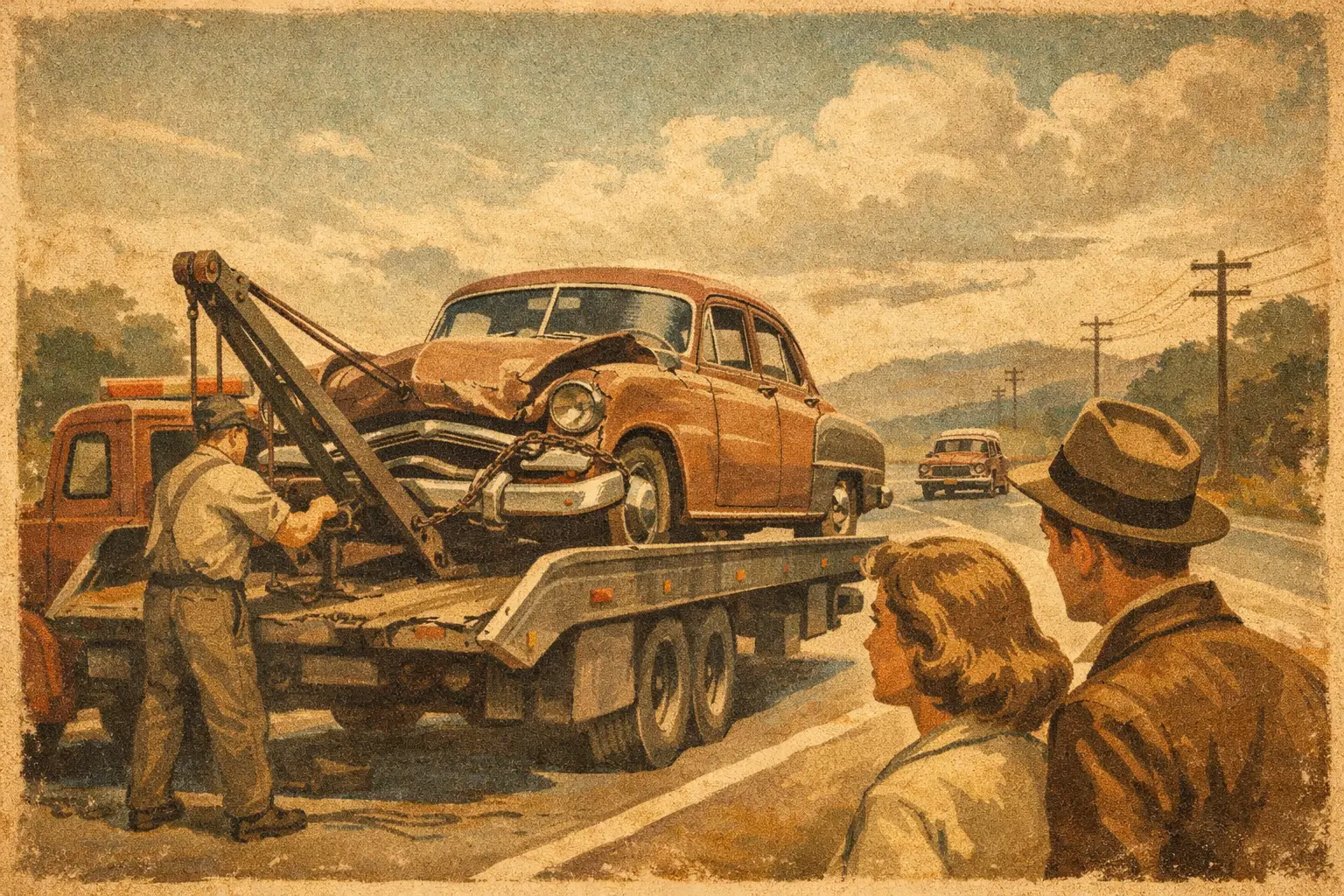
For most drivers, there are three realistic options. The first is professional recovery on a flatbed or transport vehicle. This is usually the safest route for a non-running or damaged car, especially over longer distances. The whole vehicle is loaded, secured and moved without its wheels turning on the road.
The second is a tow using a rigid bar or rope, but this only suits certain breakdowns, short distances and safe road conditions. Both drivers need to know what they are doing, and the law still applies on lights, number plates, braking and overall road safety. It is not the easy workaround many think it is.
The third is a trailer, where the broken car is loaded behind another vehicle. That can work well, but only if you have the right towing vehicle, correct licence entitlement, proper straps, ramps and loading knowledge. For most people dealing with an unexpected breakdown, this is not the practical answer on the day.
When professional recovery is the right call
If the car is stranded at the roadside, in a car park, outside your house or at work, professional recovery is usually the quickest and least stressful option. It is especially worth it if the car is low, damaged, stuck in park, has a flat battery with an electronic handbrake issue, or has one or more wheels that will not rotate.
A proper recovery operator can winch the vehicle on, use skates if needed, and secure it correctly for transport. That matters more than people realise. A badly loaded car can shift, scrape bumpers, damage undertrays or stress suspension points during the journey.
If you are in Peterborough or nearby and the car needs moving urgently, a local recovery service is often faster than trying to organise favours, borrow equipment, or work out a DIY tow under pressure. When the vehicle is blocking access, sitting in a dangerous spot or needs same-day collection, speed matters.
Why tow ropes are often the wrong choice
A tow rope sounds simple because it looks cheap and basic. In practice, it has plenty of limits. The broken car still needs steering and braking control. That means the driver inside must remain alert and physically able to control the vehicle. If the engine is off, brake assistance and power steering may be reduced or gone completely.
There is also the issue of visibility and reaction time. In traffic, the gap between both vehicles changes quickly. Harsh braking can snap the rope tight and cause a jolt. Poor coordination can lead to rear-end contact. On hills, roundabouts and busy junctions, things get messy fast.
Then there is legality. The towed vehicle must still comply with road rules as far as applicable. If lights are not working, if the tyres are damaged, or if the car is in an unsafe condition, you should not be towing it on the road. If there is any doubt, stop there and arrange recovery instead.
What to tell the recovery operator
If you want the job handled properly first time, give the right details. The make, model and exact location are the basics. Beyond that, mention whether the car starts, whether it rolls, whether the steering works, and whether there has been an accident.
Also mention anything awkward about access. Tight gates, underground parking, multi-storey car parks, steep drives and low kerbs can all affect how the vehicle is collected. If the wheels are locked or the car is stuck in gear, say so. If the car needs to be dropped at a garage, home address or storage site, have that ready too.
This is not about over-explaining. It is about getting the right vehicle sent out and avoiding wasted time.
Preparing the car for transport
Once recovery is booked, remove valuables and gather anything you may need from the car straight away. That includes house keys, work items, child seats if necessary, medication, and documents. You may not have easy access once the vehicle is loaded.
If the car can still be put into neutral and the handbrake released safely, do that only when instructed. Do not crawl under the vehicle or try to force stuck mechanical parts. If there is a fuel or fluid leak, keep clear and mention it again when the operator arrives.
If you are leaving the car before collection, make sure the recovery team has the exact location and any access instructions. A photo can help, especially in larger car parks or estates with similar-looking roads.
Cost depends on the job, not just the miles
People often ask for a price before anything else, which is fair. But the cost to transport a broken car is not based on distance alone. A straightforward non-starter on a driveway is one thing. A damaged vehicle with locked wheels in a narrow bay is another.
Time of day can matter, and so can urgency. Out-of-hours collection, difficult loading conditions and longer journeys all affect the quote. The important thing is clarity. A fair recovery quote should reflect the real job, without surprises because key details were missed at the start.
Cheapest is not always cheapest in the end. If poor loading causes more damage, or the wrong vehicle turns up and the job has to be rearranged, you lose time as well as money.
If the car is beyond repair
Sometimes transport is not about getting the car fixed. It is about getting it removed. If the repair cost is too high, the engine has failed completely, or the car is not worth putting back on the road, recovery to a scrap collection point may make more sense than paying for multiple moves.
That is worth deciding early. If you already suspect the car is finished, say so. It can change the most practical and cost-effective plan.
When a car breaks down, the best decision is usually the simplest one. Do not guess, do not drag it, and do not take chances with an unsafe tow. Get the vehicle moved properly, keep the situation calm, and make the next step easier on yourself.
Leave a Reply