A car that will not start at the kerbside feels urgent straight away. In that moment, most drivers are not thinking about service categories – they just want help. But understanding roadside repair vs vehicle recovery can save time, avoid confusion, and help you ask for the right support first time.
The short version is simple. Roadside repair means fixing the problem where the vehicle has stopped so you can carry on driving. Vehicle recovery means moving the vehicle because it cannot be safely or legally driven, or because a roadside fix is not possible. The two services often sit side by side, but they are not the same job.
What roadside repair means
Roadside repair is the practical fix done at the scene. The aim is to get the vehicle moving again without needing transport elsewhere. That might be a jump start, fuel delivery after running out, a battery issue check, or a minor problem that can be sorted safely on the roadside.
This is usually the quickest option when the fault is straightforward and the vehicle is otherwise roadworthy. If your battery has gone flat outside work, or you have put off getting fuel for too long, a roadside visit can often solve the problem there and then.
That said, roadside repair has limits. If the issue needs workshop equipment, replacement parts that are not carried, or more time than is safe to spend at the roadside, the repair route ends there. A good operator will tell you quickly whether the vehicle can be fixed on the spot or whether recovery is the better next step.
What vehicle recovery means
Vehicle recovery is about safe movement rather than repair. If the car has broken down in a way that cannot be fixed immediately, has been involved in an accident, or has a fault that makes driving unsafe, it needs transporting.
That transport might be to your home, a garage, a workplace, or another agreed location. In some cases, recovery is also needed for cars with locked wheels, steering problems, accident damage, or non-runners that need to be collected from a driveway or car park.
Recovery is also the right choice when trying to drive the vehicle further could cause extra damage. A misfire, overheating issue, clutch failure, damaged suspension, or warning signs after a collision are all cases where forcing the car on could make a bad situation worse.
Roadside repair vs vehicle recovery: the real difference
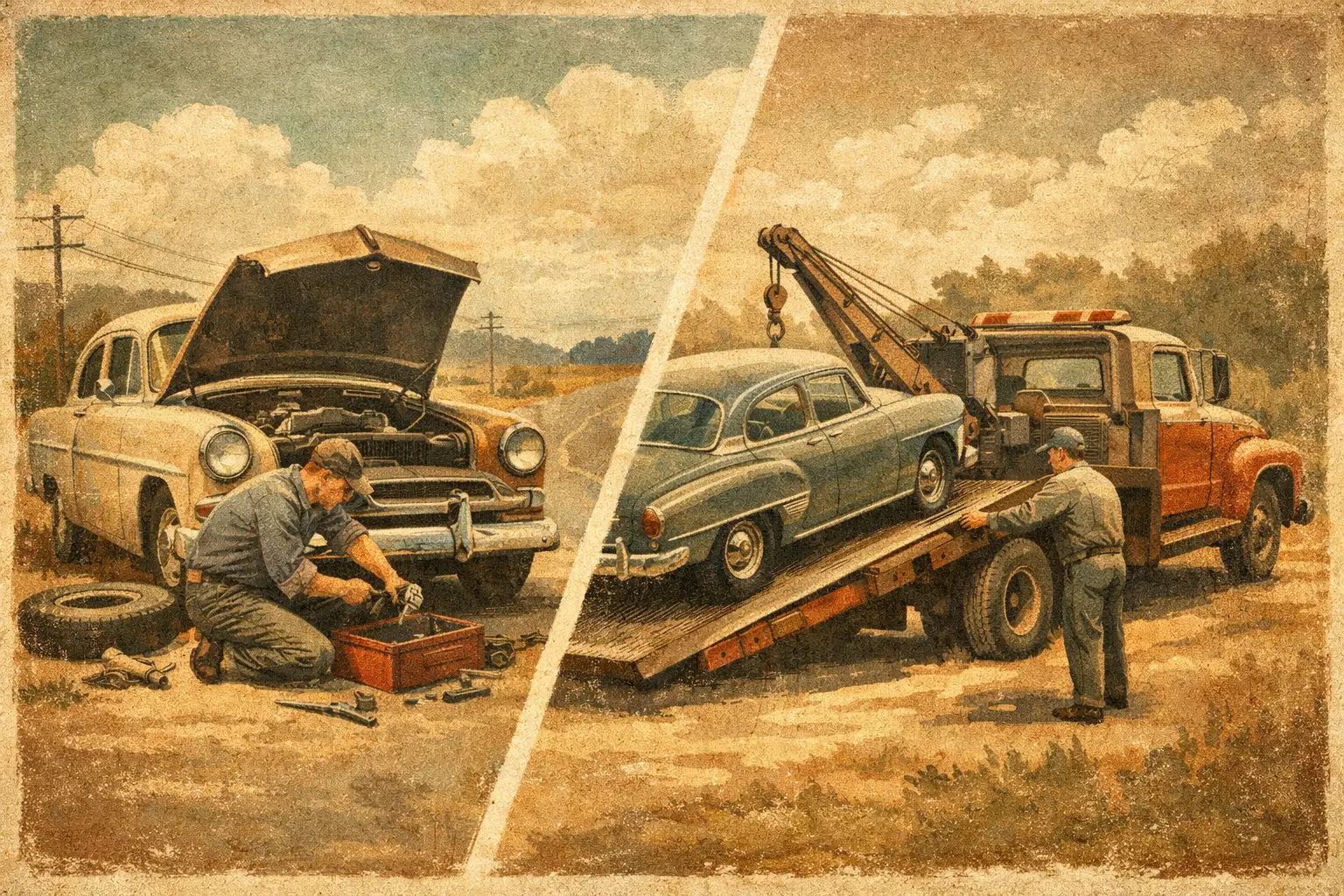
The main difference in roadside repair vs vehicle recovery is the end result. One aims to put you back on the road. The other aims to move the vehicle safely off the road.
That sounds obvious, but it matters because customers often ask for a tow when they only need a jump start, or they ask for a roadside mechanic when the vehicle is clearly not drivable. Getting that call right means a faster response and the right equipment arriving first time.
There is also a cost and time angle. A successful roadside repair can be cheaper and quicker because it avoids loading and transport. But if the fault is more serious, asking for a repair visit first can sometimes delay the inevitable. It depends on the symptoms, the location, and whether the vehicle is safe to work on where it has stopped.
When roadside repair is usually the right call
If the problem is minor, sudden, and isolated, roadside help often makes sense. Flat batteries are the obvious example. Cars left unused for too long, cold weather starts, or lights left on overnight can all leave you stranded with a battery issue that can often be dealt with there and then.
Running out of fuel is another common one. It is frustrating, but it is normally simple to sort. The same goes for some non-start faults where the cause is obvious and does not involve major mechanical failure.
Location matters too. If your car is stopped somewhere accessible and reasonably safe to attend, roadside repair becomes more practical. A vehicle on a quiet residential road is a different job from one stranded in a dangerous live traffic environment.
When vehicle recovery is the safer option
Recovery becomes the better option when the vehicle is immobilised in a way that cannot be fixed quickly, safely, or legally at the roadside. If the wheels are damaged, the steering is affected, the car has been in a collision, or it simply will not move under its own power, transport is usually the answer.
It is also the safer option if the vehicle has broken down somewhere awkward. A hard shoulder, a busy main road, a tight underground car park, or a place where roadside work would put people at risk changes the job. The priority shifts from repair to getting the vehicle moved without delay.
Then there are faults where the car might technically still move, but should not. Overheating, brake issues, suspension damage, severe warning lights, or fluid leaks are good examples. If driving on could risk an accident or a much bigger repair bill, recovery is the sensible call.
Why drivers often confuse the two
Most people only need this kind of help when something has already gone wrong. They are stressed, late, or stuck with family in the car. In that state, the distinction between repair and recovery is not always top of mind.
The wording does not help either. People use breakdown, towing, rescue, jump start, transport and recovery almost interchangeably. From a customer point of view, they all mean the same thing – please get me out of this situation. From an operator point of view, those details matter because they change what vehicle, tools and time slot are needed.
That is why clear communication on first contact matters. Tell the operator what the car is doing, where it is, whether it rolls freely, whether the steering works, and if there has been any accident damage. A quick, accurate description often decides whether a roadside fix is realistic.
What to expect when you call for help
A proper recovery operator will not make you guess. They will ask direct questions, keep it simple, and tell you what service fits the situation best.
Usually, they will want the make and model, your exact location, the symptoms, and whether the vehicle is accessible. They may also ask if the car is stuck in gear, has a flat battery, has run out of fuel, or has damaged wheels. These details are not just admin – they help avoid delays and make sure the right kit arrives.
If you are in Peterborough or the surrounding postcodes, this is where a local operator can make a real difference. Faster area knowledge, shorter travel times, and clear updates matter when you are stranded and want the problem dealt with quickly.
Choosing the right service without overthinking it
If the issue looks small and the vehicle is otherwise fine, ask about roadside repair first. If the car is damaged, unsafe, blocked in, or clearly not drivable, ask for vehicle recovery.
If you are unsure, say that. A decent operator will guide you based on the symptoms instead of pushing the wrong service. That is often the most useful part of the call – not jargon, just a straight answer on what happens next.
For many jobs, the smartest approach is a combined one. The operator arrives prepared to assess the vehicle, attempts a safe roadside solution if appropriate, and recovers it if not. That avoids wasting time and gets you from breakdown to plan B quickly.
Roadside repair vs vehicle recovery for older or unwanted cars
There is another angle that often gets missed. Sometimes the vehicle is not just broken down – it is at the point where repairing it no longer makes financial sense.
An older non-runner with repeated faults, accident damage, or MOT-related issues may need recovery simply to get it moved or collected. In those cases, the question is less about getting back on the road today and more about getting the vehicle off your hands without hassle. That is still recovery, even if there is no intention to repair it afterwards.
This is where a no-nonsense local service helps. If the car needs moving today, whether to a garage, home address, or collection point, speed and clarity matter more than fancy promises.
When your vehicle stops unexpectedly, the best next step is not to guess the technical fault. Focus on what the car can and cannot do, explain it clearly, and let the right service do its job. The quicker that happens, the quicker the stress starts to lift.
Leave a Reply