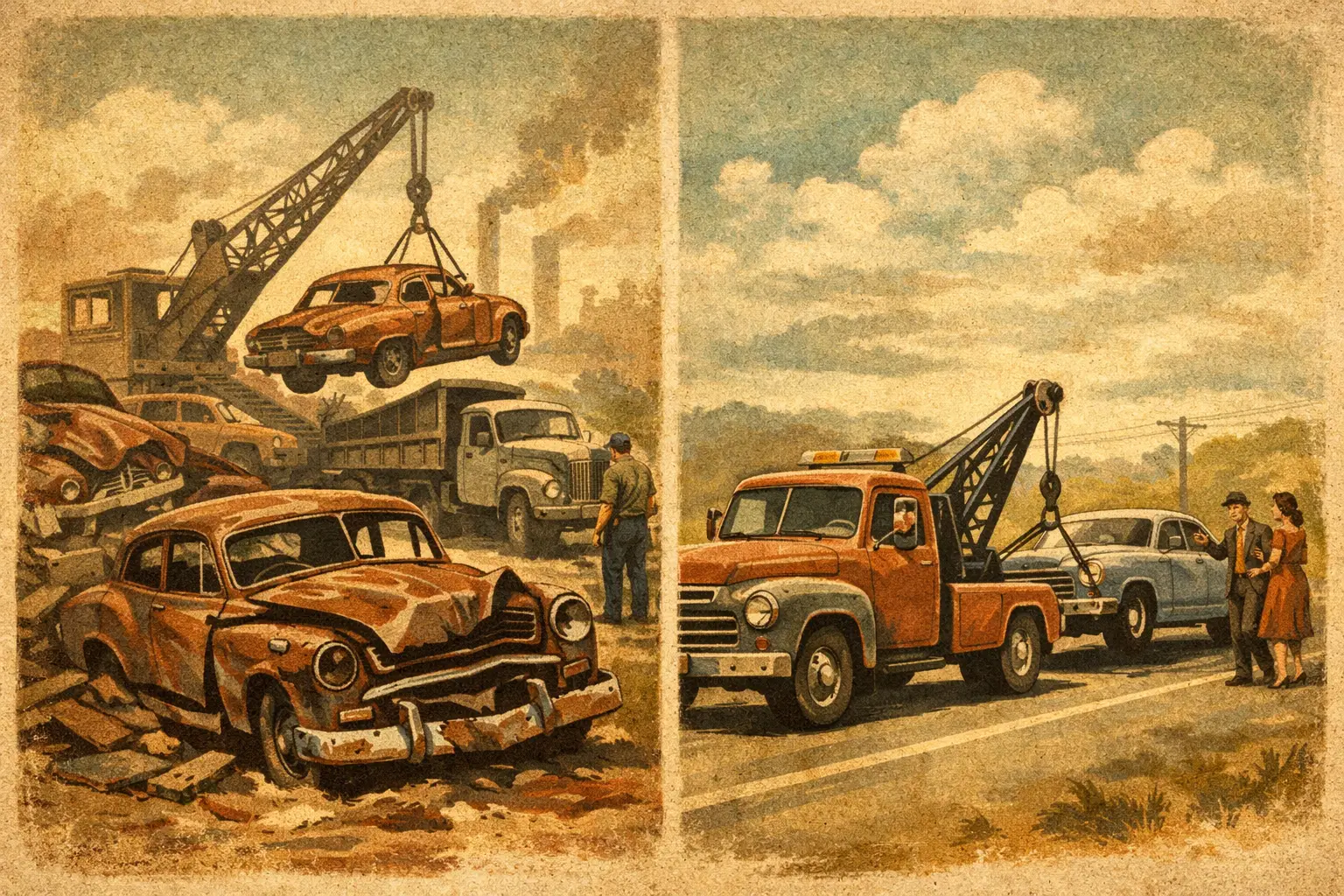
A car that will not start on the drive can look like one problem, but it is often two very different jobs. That is where scrap car collection versus towing matters. One service is about moving a vehicle you still need. The other is about removing a vehicle you are finished with. If you choose the wrong one, you can lose time, pay for the wrong service, or delay getting the car dealt with properly.
For most drivers, the confusion starts when the car is not worth fixing, but still needs moving. It may have failed its MOT, suffered engine damage, or been sitting unused for months with flat tyres and seized brakes. At that point, towing and scrap collection can sound similar. In practice, they solve different problems.
What scrap car collection versus towing really means
Towing is vehicle transport. The goal is to move a car from one place to another, usually because it has broken down, been in an accident, or cannot be driven safely. The car still has a destination. That might be a garage, your home, a body shop, a storage yard, or another address.
Scrap car collection is disposal. The goal is to remove an end-of-life vehicle so it can be processed for scrap, salvage, or recycling. In that case, the vehicle is not being moved so you can keep using it. It is being collected because you want rid of it.
That sounds straightforward, but there is a grey area in the middle. Some cars are technically recoverable yet financially not worth recovering for repair. A ten-year-old hatchback with major gearbox failure might still be towable to a garage, but once you factor in transport, diagnosis, and repair, scrap collection may make more sense.
When towing is the right call
Towing is usually the right option when the vehicle still has value to you. If you plan to repair it, sell it privately, move it to another location, or store it while you decide what to do, then recovery or towing is the practical choice.
This often applies after breakdowns. A failed battery, clutch problem, overheating issue, electrical fault, accident damage, or puncture can leave a car stranded, but not necessarily finished. In those cases, the priority is safe transport. You need the vehicle picked up properly, loaded securely, and delivered where it needs to go without creating more damage.
Towing is also the better fit when timing matters. If your car is blocking access, stuck in an unsafe place, or stranded away from home, you may need immediate removal first and decisions later. A recovery service can solve the urgent part of the problem quickly.
When scrap collection is the better option
Scrap collection is usually the right move when the vehicle has reached the end of the road financially or practically. That might be because the repair bill is too high, the car has been declared uneconomical to fix, or it has simply been off the road for so long that putting it back into use no longer stacks up.
A scrap vehicle is often non-running, but that alone does not make it scrap. The key question is whether you want to keep it. If the answer is no, collection is normally simpler than paying to tow it somewhere else first.
This matters for people clearing space on a driveway, dealing with an inherited vehicle, or trying to remove an unwanted car without extra hassle. If the car is beyond sensible repair, direct collection avoids an extra step.
The cost difference is not always what people expect
Many people assume scrap collection is always free and towing always costs money. Sometimes that is true, but not always.
With towing, you are paying for a transport service. The price will depend on distance, vehicle condition, access, whether wheels are locked, and how difficult the recovery is. A straightforward move from a driveway to a local garage is very different from recovering a damaged vehicle from a roadside verge late at night.
With scrap collection, the value of the vehicle matters. Some scrap cars have enough value in metal, parts, or demand to offset the collection cost. Others are worth very little, especially if they are incomplete, badly damaged, stripped, or hard to access. In those cases, the collection offer may be lower than expected.
The practical takeaway is simple. If the vehicle is still worth repairing or selling, towing may preserve more value overall. If it is not, scrap collection may save you from spending good money moving a car you do not actually want.
Scrap car collection versus towing for non-runners
Non-runners cause the most confusion because both services can handle them, depending on the outcome you want.
If the car will not start but you want it repaired, it needs recovery or towing. If the car will not start and you want rid of it, it needs scrap collection. The mechanical condition may look identical on paper, but the intention behind the job is completely different.
That is why a proper quote should ask more than, “Does it run?” It should also ask where the vehicle is, whether the wheels roll, whether the steering locks, and what you want done with it. A car with flat tyres and a seized brake can still be moved, but it needs the right equipment and enough time allowed for loading.
Access and vehicle condition can change the job
Not every collection or tow is straightforward. Cars parked in tight spaces, underground bays, narrow lanes, or behind other vehicles can take longer and require more planning. The same applies to vehicles with missing wheels, serious accident damage, or steering faults.
This is where the difference between a basic scrap enquiry and an actual vehicle movement job becomes important. If a company is collecting a car for scrap, they still need to know whether it can be loaded normally. If it cannot, that affects the method and sometimes the price.
For towing, the same issues affect response time and vehicle choice. A standard recovery lorry may be fine for one job and unsuitable for another. Clear information at the start avoids wasted time on the day.
Which service is faster?
It depends on what you need done.
If your main issue is urgency, towing is often the faster answer because it is built around immediate vehicle removal. That suits breakdowns, roadside incidents, and situations where the car cannot stay where it is.
If the vehicle is on private property and you simply want it gone, scrap collection can be just as quick, especially when the paperwork and collection slot are arranged together. For many people, same-day or next-day collection is the deciding factor.
In Peterborough and surrounding areas, local operators are usually best placed to handle both urgent recoveries and planned collections because travel time is shorter and communication is simpler. That matters when you are trying to sort the issue without a string of callbacks.
The paperwork side matters more with scrap
Towing is mainly about movement. Scrap collection is about disposal, so the paperwork matters more.
If you are scrapping a car, you need to make sure it is being collected through the proper process and that ownership and disposal are handled correctly. This is especially important if the vehicle has been sitting unused for a long time, the MOT has expired, or the tax and insurance situation has changed.
By contrast, if your car is being towed to a garage or home address, the paperwork is usually much simpler. You are not disposing of the vehicle. You are just moving it.
That difference is one reason not to treat scrap collection as just “cheap towing”. It is a different service with a different end result.
How to decide without overthinking it
Ask yourself one direct question: do you want to keep the vehicle?
If yes, book recovery or towing.
If no, book scrap collection.
If you are unsure, look at the likely repair cost, the car’s market value, and how quickly you need it moved. A car worth £1,200 with a £1,500 repair bill is usually not a towing job unless there is a sentimental reason to save it. A newer vehicle with a single major fault is different.
When in doubt, give the full picture. Say whether the car runs, whether it rolls, where it is parked, and whether your aim is repair, transport, or disposal. A proper local service should tell you quickly which option fits best rather than forcing the wrong booking.
Car Recovery Peterborough handles the urgent side of this well because the job starts with what you need done now, not with a one-size-fits-all answer. That makes life easier when the vehicle is stuck, damaged, unwanted, or all three.
The right choice is not about using the cheaper-sounding service. It is about using the service that matches the outcome you actually want. Get that part right, and the rest becomes much simpler.
Leave a Reply